Old Town Quiet Highlight
Stavropoleos Monastery
A calm, beautiful stop in the heart of Lipscani — and one of the best “pause moments” in Bucharest.
Reviewed May 2026 · Love Bucharest editorial team
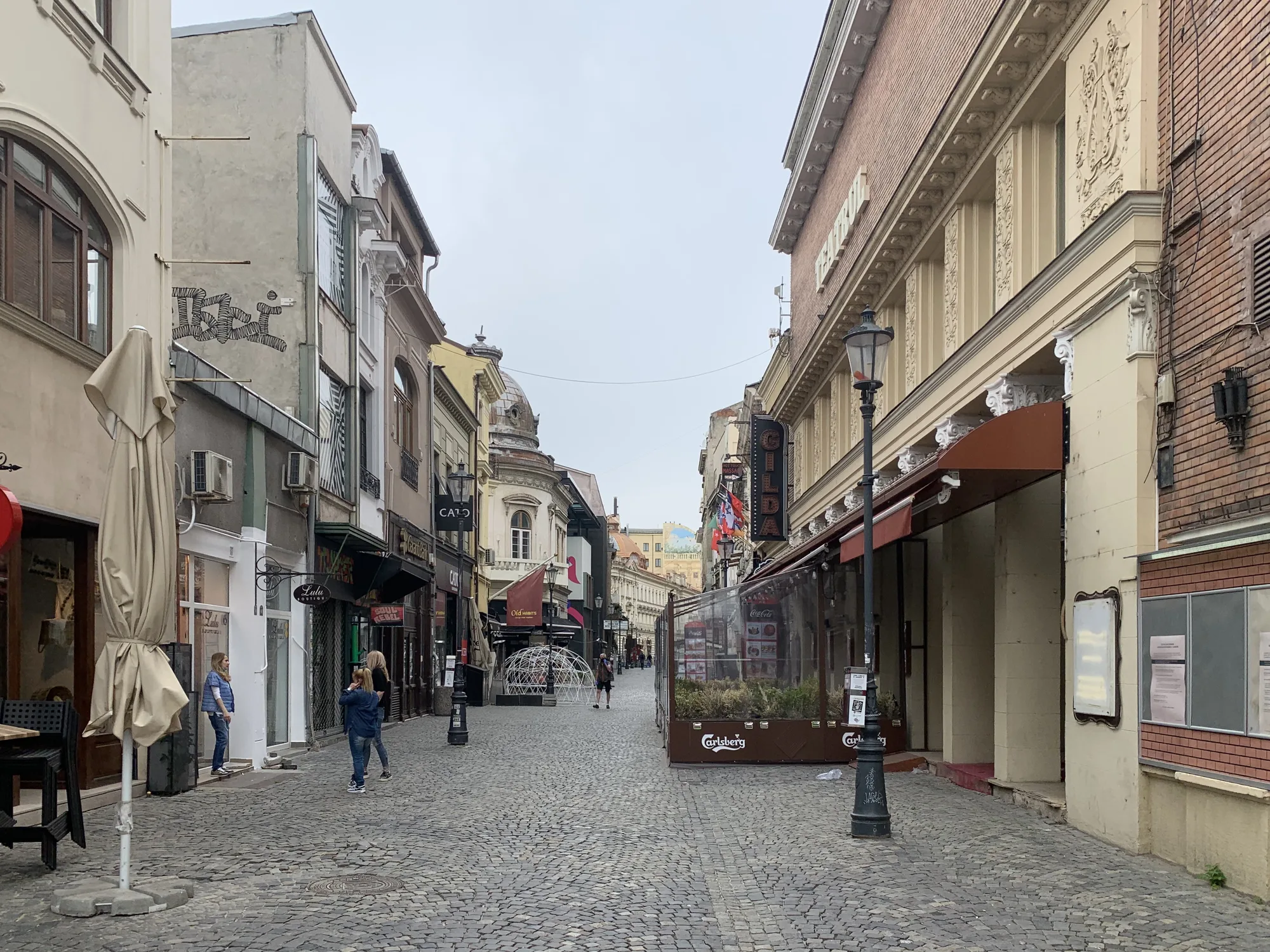
Photo: Nickispeaki · CC BY-SA 4.0 · Wikimedia Commons
The most peaceful stop in Bucharest’s busiest neighborhood
Stavropoleos is the kind of place that makes a city feel layered. One minute it is Old Town noise and movement, the next it is a quiet courtyard and candlelight. It is small, quick to visit, and memorable — especially when used as the calm center of an Old Town walk.
A small church with a long history
Stavropoleos is one of the oldest and most beautiful churches in central Bucharest. Knowing its story makes the pause inside feel deeper.
A 1724 church in the Brâncovenesc style
The Stavropoleos church was built in 1724, during the reign of Prince Nicholas Mavrocordat, by the Greek archimandrite Ioanichie (Ioannikios) Stratonikeas. Its name comes from the Greek see of Stavropolis. It is one of the finest surviving examples of the Brâncovenesc style — the elegant late-17th- and early-18th-century Wallachian synthesis of Byzantine, Ottoman, late-Renaissance and Baroque elements that flourished under Prince Constantin Brâncoveanu.
Carved stone, a painted interior and a colonnaded courtyard
Although small, the church is exquisitely detailed: an intricately carved stone façade, a portico of slender columns with floral capitals, and a frescoed interior. A peaceful colonnaded courtyard, added in the early 20th century when the architect Ion Mincu restored the complex, surrounds a garden with old tombstones and fragments of demolished Bucharest churches — a quiet open-air museum in its own right.
A living centre of Byzantine music
Stavropoleos is an active monastic community with a small group of nuns, and it is renowned for keeping Byzantine liturgical chant alive — it holds one of Romania’s largest collections of Byzantine-music books and has a resident choir. Stepping inside during a service, you may hear that ancient, unaccompanied chant filling the painted nave: the single most memorable thing about the place.
A quiet pocket in the middle of Old Town
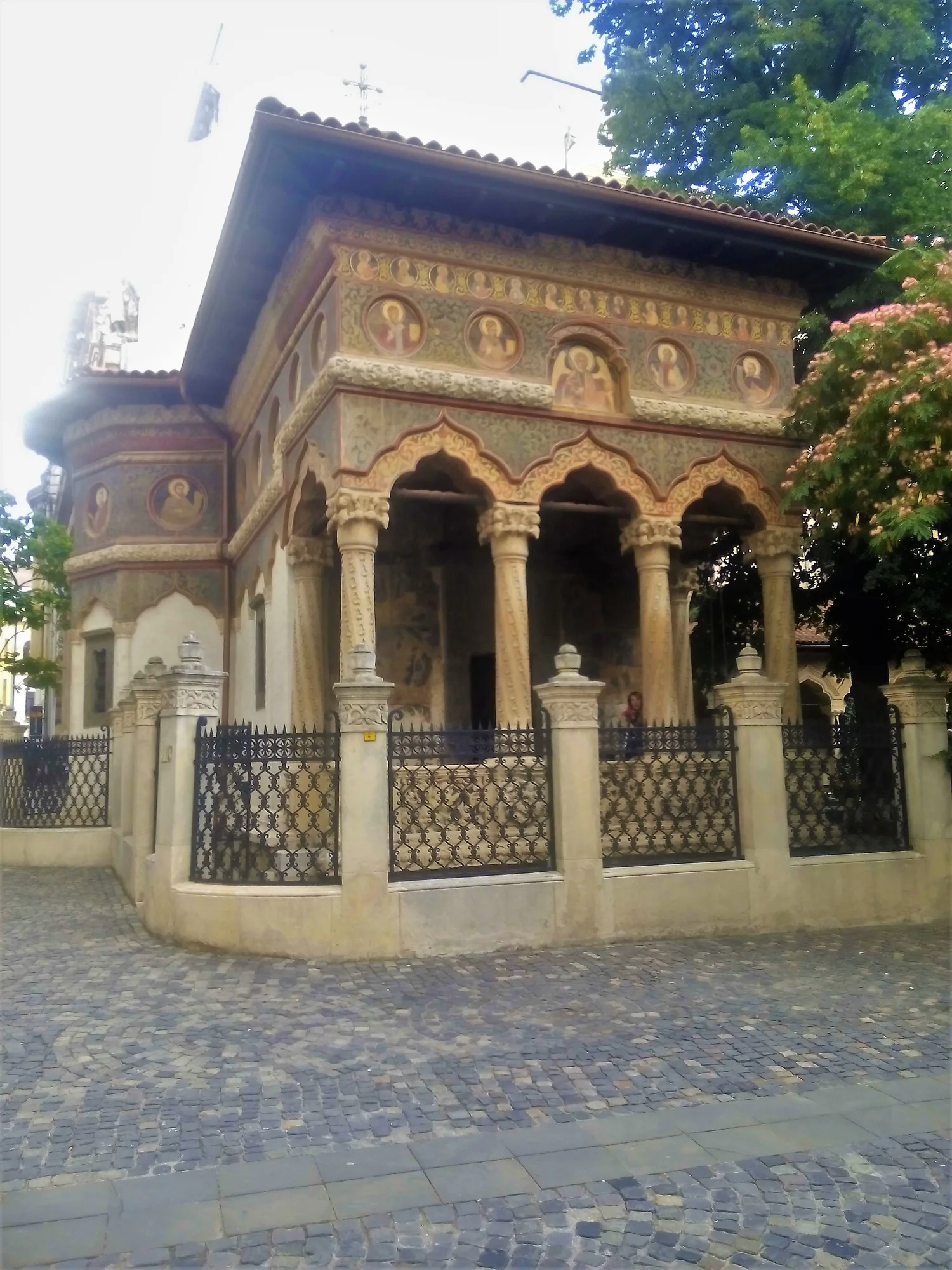
Old Town can be loud and crowded. Stavropoleos is the opposite: calm, candlelight, and a courtyard that feels like a hidden world.
One of the most beautiful small churches in central Bucharest
The carvings, proportions, and atmosphere make it a highlight even for travelers who are not “church people.”
Perfect for a 10–20 minute stop
It is an ideal “reset” moment inside a busy sightseeing day.
Visiting tips (respectful, easy, practical)
Go in the morning
Morning visits feel calmer and more respectful, with fewer crowds moving through.
Dress and behavior
This is an active religious site. Keep voices low, avoid blocking entrances, and dress modestly when possible.
Photography etiquette
Rules can vary. If photography is allowed, avoid flash and prioritize the atmosphere over the shot.
Use it as a route anchor
Plan your Old Town loop around it: passages → monastery pause → bookstore → café.
What to look for (small details, big payoff)
Courtyard calm
A small, peaceful space that feels like a pause button for the city.
Carved details
Look closely at stone and woodwork — the beauty is in the craftsmanship.
The contrast
Step out and notice the shift: from quiet interior to buzzing Old Town streets.
Seasonal light
Soft light in the morning or late afternoon makes the courtyard feel especially photogenic.
Pair it with these (best Old Town loop)
Old Town passage loop
Combine with the covered passages and courtyards for the best “Old Town details” route.
Passage guide →Carturești Carusel
A perfect indoor pairing: calm monastery → bright bookstore interior.
Bookstore guide →Old Town restaurants
Finish the loop with dinner—just step away from the loudest streets for better meals.
Old Town dining →Frequently asked questions
How much does it cost to visit?
Entry to the church and courtyard is free. As with all working Orthodox churches in Bucharest, a small donation is welcome but never required. There is no ticket and no booking.
When is it open?
It is an active church, generally open through the day for visitors and worshippers, with services at set times. Mornings tend to be the calmest. Because it is a living monastery rather than a museum, hours can flex around the liturgical schedule — keep your visit brief and respectful if a service is underway.
Where is it, exactly?
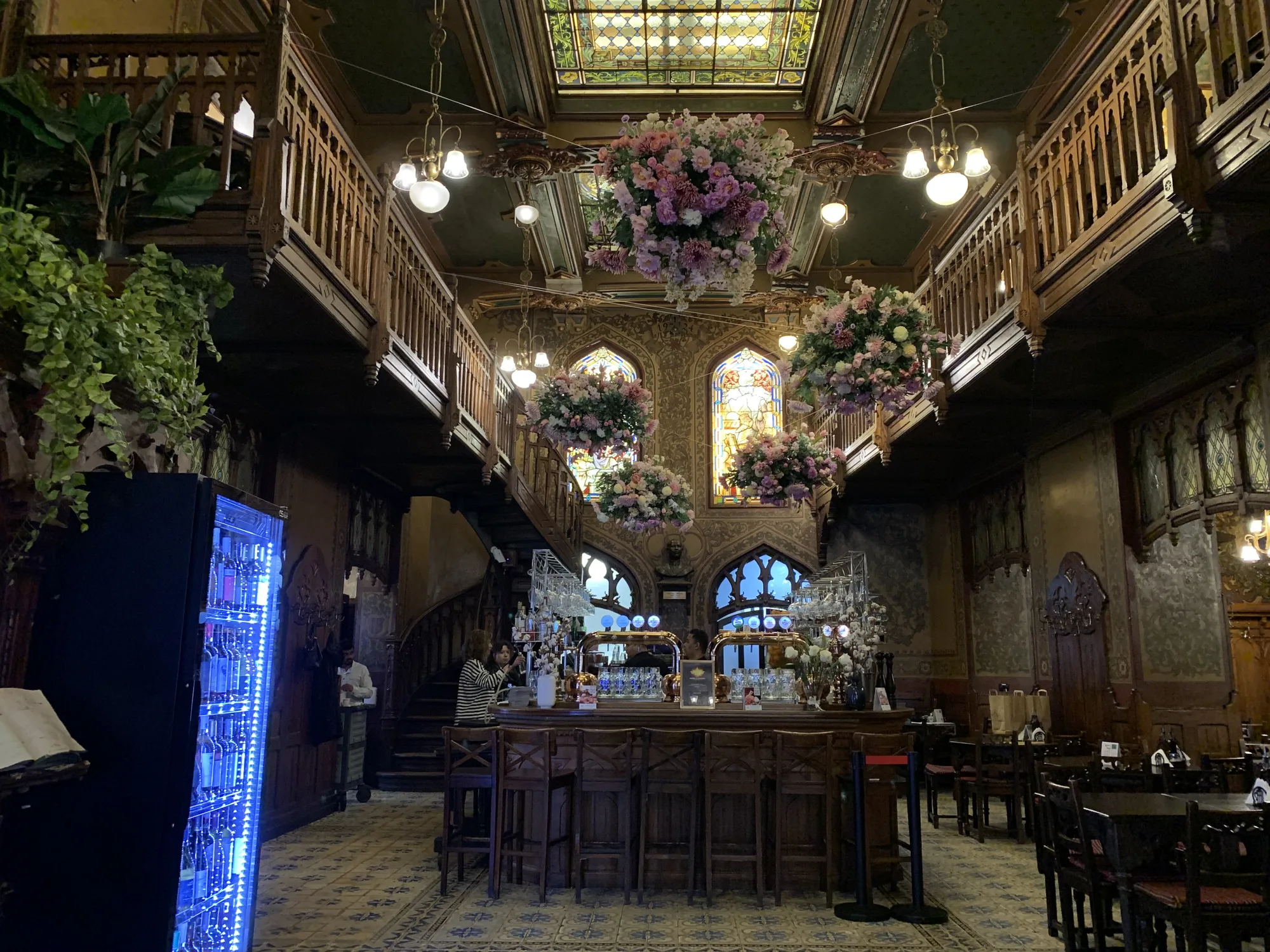
It sits on Strada Stavropoleos in the heart of the Old Town (Lipscani), tucked just behind the grand Caru’ cu Bere restaurant and a short walk from the National Bank and Cărturești Carusel bookshop. It is easy to miss on the small street, which is part of its hidden-gem charm.
How long should I spend there?
A visit takes about 10–20 minutes — long enough to take in the carved façade, the courtyard garden and the frescoed interior. It works best as a calm pause in the middle of a busier Old Town walk rather than a standalone destination.
What should I wear, and how should I behave?
Dress modestly out of respect — covered shoulders and knees are appreciated, and some visitors cover their heads inside. Keep your voice low, do not block the entrance or the icons, and avoid walking in front of people who are praying.
Can I take photos inside?
Photography rules vary and may be limited inside the church, especially during services; the courtyard is more relaxed. If photos are allowed, avoid flash and prioritise the atmosphere over the shot. When in doubt, ask or simply refrain.
What does “Brâncovenesc” mean?
It is the name of a distinctive Romanian (Wallachian) architectural and decorative style from the era of Prince Constantin Brâncoveanu around 1700, blending Byzantine, Ottoman and Western Baroque influences. Stavropoleos is one of the best small examples of it in Bucharest.
What should I combine it with?
It is the perfect calm anchor for an Old Town loop: pair it with the yellow-glass Macca-Vilacrosse passage, the Cărturești Carusel bookshop and a courtyard café or restaurant a street or two off the loudest lanes.
Explore Old Town properly
Old Town feels best with a route: a few intentional highlights, one calm pause, and a great meal away from the loudest streets.