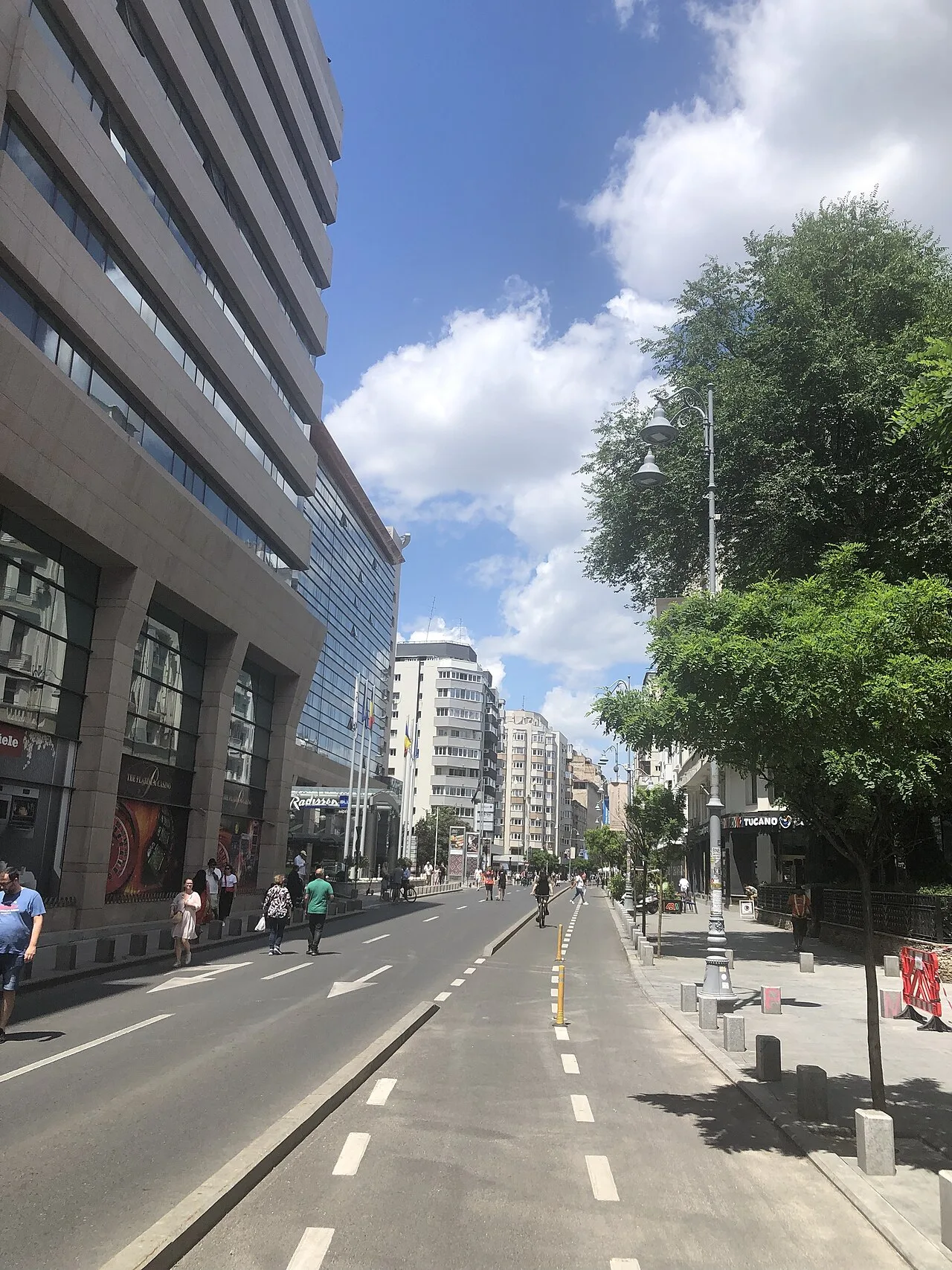
Pedestrians stroll along Calea Victoriei in Bucharest on a sunny day, the broad avenue lined with trees and grand facades

A Complete Itinerary

4 Days in Bucharest

Four days adds breathing room: more parks, more cafés, and a proper finale—without turning the trip into a checklist.

Reviewed May 2026 · Love Bucharest editorial team

Photo: Turgidson · CC BY-SA 4.0 · Wikimedia Commons

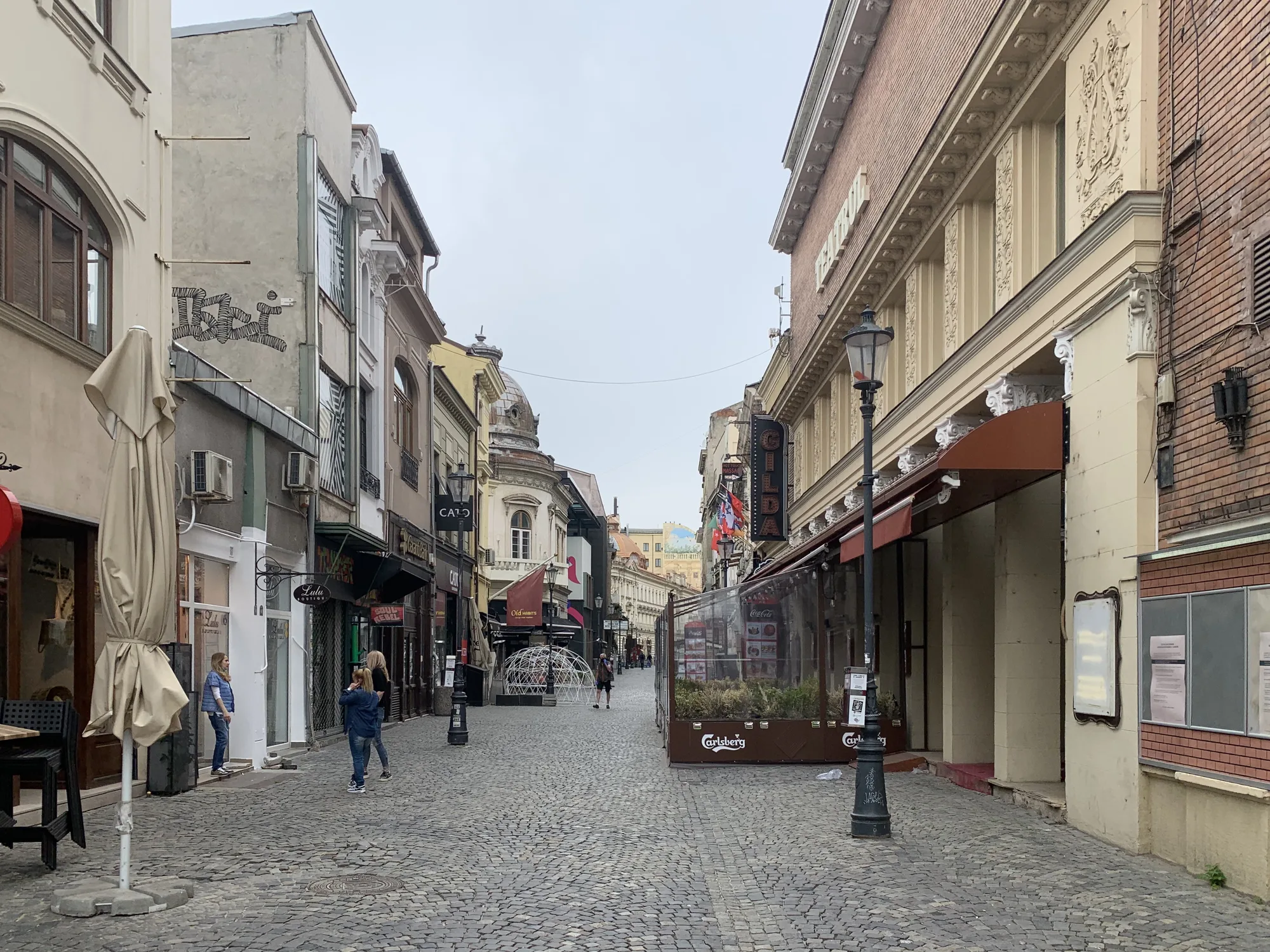
Cobbled Strada Lipscani in Bucharest's Old Town, lined with Belle-Époque townhouses and café terraces
Cobbled Strada Lipscani, the spine of Bucharest's Old Town café scene.Photo: Neoclassicism Enthusiast · CC BY-SA 4.0 · Wikimedia Commons

The 4-day rhythm: 1 anchor + 2 flexible blocks

Four days is the length most first-timers wish they had booked. Three days covers Bucharest's essentials — the cobbled Old Town, the belle-époque grandeur of Calea Victoriei, the parks, and the Palace of the Parliament — but a fourth adds something the city specifically rewards: breathing room. With an extra day you can give the Old Town a proper morning, linger over a long lunch, add a single day trip to the mountains, or spend a restful afternoon at the thermal baths without ever feeling like you are racing a checklist.

The plan below gives each day one clear anchor plus two flexible blocks you can expand, shrink, or swap depending on weather, opening hours, and energy. Day 1 is the Old Town and its hidden passages; Day 2 is the boulevard, a museum, and a park; Day 3 is the Parliament tour; and Day 4 is yours — Therme, a day trip, or deeper neighbourhood wandering. Almost everything in the historic core is walkable, with the metro, a Bolt or Uber, and a direct CFR train covering the longer hops.

Prices throughout are in Romanian lei (RON, not euro) and are planning ranges that can shift — the official sources are linked at the foot of the page so you can confirm the volatile ones before you travel. Two things to lock in early: book the Palace of the Parliament tour in advance and bring photo ID, and decide on Day 1 whether your fourth day is a spa day, a day trip, or a neighbourhood day, so the rest of the trip can flow around it.

Day 1

Old Town icons + passages + evening atmosphere

Morning

  • Start early for quiet streets and clean photos in Lipscani.
  • Add a short passage-and-courtyard loop, then step into Stavropoleos for a calm reset.
  • Use the first hours for the “details” layer: doors, courtyards, and small interiors.

Afternoon

  • Choose one sit-down lunch, then walk toward Carturești Carusel for a classic stop.
  • If energy is high, extend the loop toward Calea Victoriei for a change of scenery.
  • Keep the afternoon flexible; the Old Town is best when not rushed.

Evening

  • Pick a dinner spot with atmosphere (traditional or modern Romanian).
  • Choose a focused nightlife plan: cocktail bar, wine bar, or rooftop instead of random club-hopping.
  • End with a short night loop when the Old Town feels theatrical.
Day 2

Calea Victoriei + museums + a golden-hour walk

Morning

  • Walk a core stretch of Calea Victoriei and let the architecture set the tone.
  • Add one museum or landmark based on interest: art, history, or classical interiors.
  • Pause for a proper café stop, not a takeaway—this boulevard is made for slow breaks.

Afternoon

  • Choose one park loop: Cişmigiu for central romance or Herăstrău for big-lake scenery.
  • If the Village Museum is on the list, pair it with Herăstrău for an easy half-day.
  • If weather turns, swap the park block for museums and beautiful interiors.

Evening

  • Make it a culture night: concert, theater, or an elegant bar with calm lighting and good music.
  • Pick dinner outside the Old Town for contrast (then return for dessert if desired).

Day 3

The big-ticket anchor + a flexible afternoon

Morning

  • Book the Palace of Parliament tour and treat it as the anchor.
  • Arrive early; security and check-in can take time.
  • Keep the rest of the morning light to avoid stacking too much before the tour.

Afternoon

  • Option A: a museum route (two stops max) with café breaks between.
  • Option B: a neighborhood wander (local cafés, courtyards, and small parks).
  • Option C: a long, slow lunch plus a short walk—simple and surprisingly memorable.

Evening

  • Choose one “final Old Town” evening or a calmer boulevard dinner, depending on mood.
  • Add a short night walk for closure—Bucharest rewards small rituals.

Day 4

Choose the finale: Therme, day trip, or deep-dive neighborhoods

Morning

  • If staying in the city: do a relaxed walking route and a café crawl block.
  • If doing a day trip: keep it simple—one destination, one plan, no multi-stop marathons.
  • If the trip is wintery or rainy: plan the morning indoors (museum, concert hall, bookstore).

Afternoon

  • Therme afternoon is a perfect travel reset—especially after three walking-heavy days.
  • If not doing Therme, use the afternoon for parks, photo spots, or a calm neighborhood loop.
  • Leave a buffer for shopping, packing, and a non-rushed last meal.

Evening

  • Choose one standout dinner, then keep the night short and scenic.
  • If the Old Town is close: a quick loop for lights and atmosphere finishes the trip beautifully.
🧭

What each day actually looks like

Day 1 — the Old Town, slowly

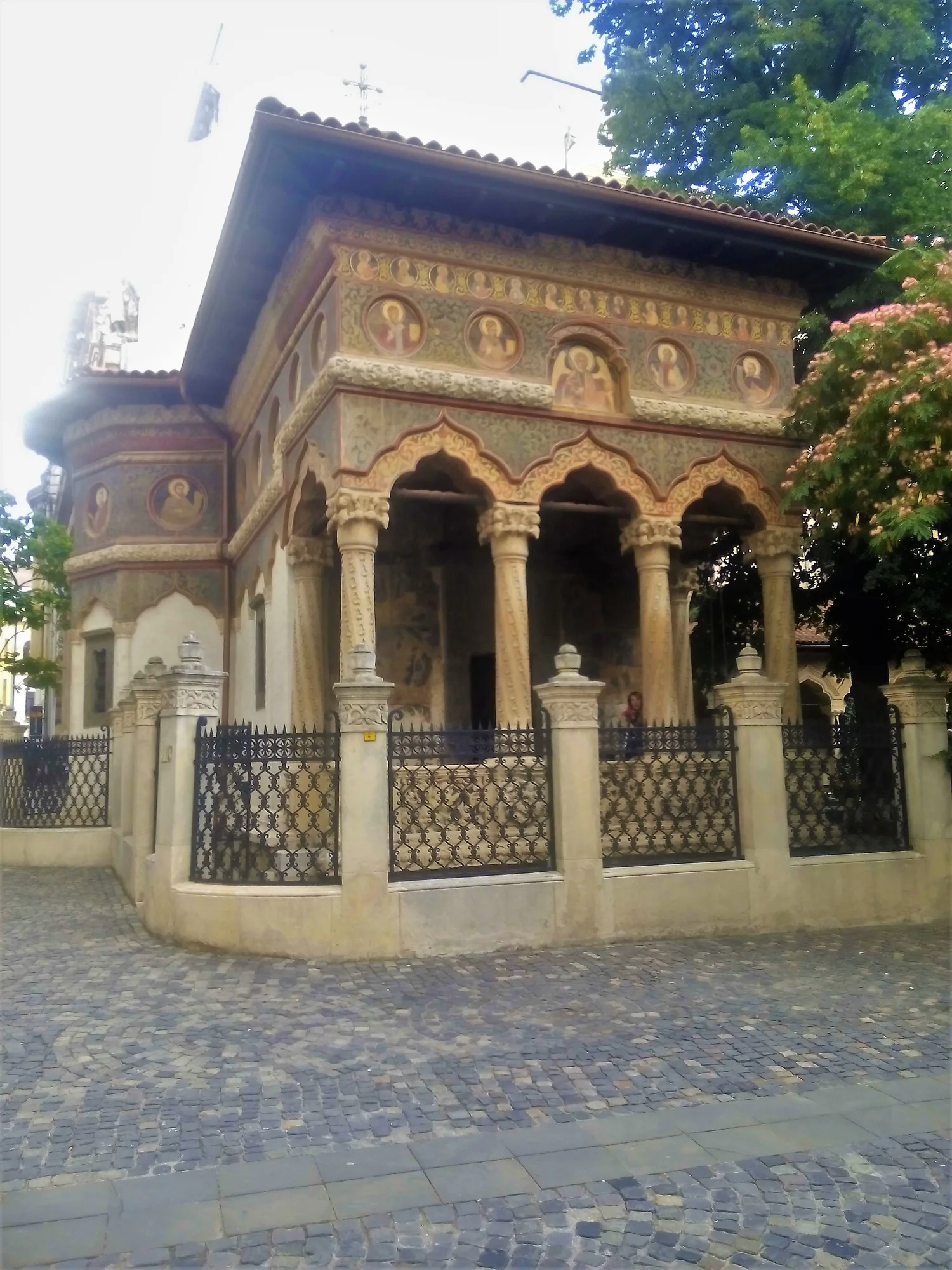
With four days, you can afford to give the Old Town a full, unhurried day rather than a rushed half. Start early at Pasajul Macca-Vilacrosse, the yellow-glass covered passage off Calea Victoriei, then thread through to Stavropoleos Monastery (a serene 1724 courtyard church), the Old Princely Court ruins linked to Vlad the Impaler, and Cărturești Carusel, the six-floor white bookstore on Strada Lipscani. Everything sits within a few hundred metres, so the day is really about texture and pace: courtyards, small galleries, a long lunch off the busiest lanes, and an evening loop when the lit facades feel theatrical.

Day 2 — Calea Victoriei and a park

Day 2 swaps intimate streets for the grand 2.7km belle-époque sweep of Calea Victoriei. Walk it from Revolution Square past the Romanian Athenaeum (the 1888 domed concert hall; a daytime self-guided visit is around 15 lei when the schedule allows) and the former Royal Palace, now the National Museum of Art of Romania. Choose just one museum so the morning stays calm, then give the afternoon to a park: Cișmigiu Gardens (central, romantic, from 1847) if you want to stay close, or Herăstrău in King Mihai I Park paired with the open-air Village Museum (adult entry about 10 lei) if you want lake scenery and folk architecture together.

Day 3 — the Palace anchor

The Palace of the Parliament is Day 3's fixed point. It is the world's heaviest building and is only visited on a guided tour (the standard route is around 60 lei and runs roughly 60–90 minutes), so book ahead and bring a government-issued photo ID for security. The tour leaves you on the vast Piața Constituției, with the fountain-lined Bulevardul Unirii pointing back toward Piața Unirii. Keep the rest of the day light around it: a two-stop museum route, a neighbourhood wander through leafy Cotroceni or Carol Park, or simply a long lunch and a short walk.

Day 4 — your choice of finale

The extra day is what makes four days feel complete rather than just longer. The three strongest finales are a Therme București afternoon (the giant thermal complex north of the city, restful after three walking-heavy days; entry is tiered by zone and time, roughly from the 70–110 lei range upward), a single relaxed day trip by direct CFR train (Sinaia for Peleș Castle about 1h30, or Brașov around 2h15), or a deep-dive into neighbourhoods you have only glimpsed — Dorobanți, Floreasca, or the antique lanes. Pick one and commit; the temptation to do all three is how a calm trip becomes a tiring one.

How to get around in four days

Walk the historic core

The Old Town, Calea Victoriei, University Square, and Cișmigiu are all within a 20–25 minute walk of each other, so most of Days 1 and 2 need no transport at all. Comfortable shoes matter more than a transit pass.

Metro for the longer hops

The four-line metro (M1–M4, run by Metrorex) is fast and cheap for reaching Herăstrău, the Village Museum, and the Parliament. Travel is on a rechargeable card; a single ride is around 7 lei (raised from ~5 lei in May 2026) — check Metrorex for the live price. Trains run roughly 05:00–23:00.

Surface transport (STB)

Buses, trams, and trolleybuses run on the separate "Card Activ" (the card itself about 3.70 lei). A 90-minute trip with transfers has been around 3 lei and a 24-hour all-surface pass about 8 lei. STB and the metro are separate ticketing systems, so a surface ticket does not cover the metro.

Rideshare and day trips

Bolt and Uber are inexpensive and ideal for late nights, luggage, or tired feet. For the Day 4 day trip, direct CFR trains from Gara de Nord reach Sinaia (Peleș) in about 1h30 and Brașov in around 2h15 — buy tickets on the official CFR site or at the station.

Where to base yourself

Four days is long enough to feel the city's layers, but only if your base is efficient. These four areas keep the whole itinerary walkable, with the metro filling in the longer hops to the parks, the Parliament, and the station for your day trip.

Old Town (Lipscani)

The most walkable base for a four-day trip, with sights, restaurants, and bars at the door. The trade-off is night-time noise — choose a street a block off the loudest lanes if you sleep lightly.

Universitate

A short walk from both the Old Town and Calea Victoriei, well connected by the M2 metro, and a touch calmer at night. A reliable all-round choice that keeps every day efficient.

Calea Victoriei

Elegant and central, lined with belle-époque buildings, museums, and the Athenaeum. Quieter than the Old Town, with fewer late-night dining options immediately on the doorstep.

Piața Romană

A practical, slightly more residential area on the M2 line with good cafés and quick access to Dorobanți dining — handy if your fourth day leans toward neighbourhood exploring rather than the historic core.

Common mistakes on a longer trip

Skipping the Parliament booking

The Palace of the Parliament admits visitors only on guided tours, and weekend and peak-season slots sell out. Reserve your time and route in advance and bring photo ID, or you risk not getting in on the day you planned.

Doing two day trips

Four days tempts people into stacking two day trips, but each one consumes a full day of travel and leaves the city itself half-seen. One day trip is plenty; spend the rest of your time actually in Bucharest.

Ignoring Monday closures

Many Bucharest museums close on Mondays, and the Village Museum runs an outdoor-only, reduced-price visit on Monday and Tuesday. Check opening days before pinning a specific museum to a specific day of the itinerary.

Changing money at the airport

Airport exchange rates are poor. Romania uses the leu (RON), not the euro; cards work almost everywhere, so withdraw a little cash from a bank ATM in town and decline dynamic currency conversion so you pay in lei.

What four days actually costs

Bucharest is one of Europe's best-value capitals, and four days here costs far less than the equivalent in Western Europe. Sightseeing is cheap: most museum tickets are around 10–15 lei, the Palace of the Parliament standard tour is roughly 60 lei, and the Village Museum is about 10 lei. Transport barely registers — a metro ride is around 7 lei (raised from ~5 lei on 1 May 2026, so check Metrorex), a 90-minute surface ticket about 3 lei, and a 24-hour all-surface pass roughly 8 lei.

The fourth-day finale is the main extra cost. A day trip adds a modest CFR train fare plus an attraction ticket — Peleș Castle and Bran Castle both sit in the tens of lei (Bran’s standard adult ticket is around 100 lei). A Therme afternoon is tiered by zone and time, broadly from the 70–110 lei range upward. Food is where you set your own pace: casual plates around 35–45 lei, mid-range mains roughly 50–120 lei, and a full meal about 150–200 lei per person before drinks.

Accommodation is the biggest variable and depends on season and area; a central base in or near the Old Town, Universitate, or Calea Victoriei is worth a small premium for the time it saves across four days. Pay by card where you can, keep a little cash for tips (about 10%, in cash) and small vendors, and always decline dynamic currency conversion so you are charged in lei.

Frequently asked questions

Is 4 days too long for Bucharest?

Not at all — four days is genuinely comfortable. Three days covers the essentials (Old Town, Calea Victoriei, parks, and the Parliament), and the fourth day adds the breathing room for a Therme afternoon, a single day trip, or a deeper look at the residential neighbourhoods. It is the length most first-timers say felt just right.

Should I use one of my four days for a day trip?

It is a great use of the fourth day if mountains and castles appeal. Direct CFR trains from Gara de Nord reach Sinaia (for Peleș Castle) in about 1h30 and Brașov in around 2h15. Keep it to a single destination and a single plan — a day trip is most enjoyable when it is not a multi-stop marathon.

Do I need to book the Palace of the Parliament tour ahead?

Yes. The Palace is only visited on guided tours and the popular slots sell out, especially at weekends and in peak season. Reserve through the official visit site, pick your route, and bring a government-issued photo ID — it is a working parliament and ID is checked at security.

What currency should I bring to Bucharest?

Romania uses the leu (RON / "lei"), not the euro. Cards are accepted almost everywhere; carry a little cash for tips, markets, and small cafés. Avoid airport exchange counters and decline dynamic currency conversion so you are charged in lei rather than a marked-up euro rate.

Is Bucharest walkable enough for a four-day trip?

The historic centre is very walkable — the Old Town, Calea Victoriei, University Square, and Cișmigiu are all within a 20–25 minute walk of each other. Use the metro or a Bolt/Uber for the longer hops to Herăstrău, the Village Museum, the Parliament, and Therme, and for the Day 4 day trip take a direct CFR train.

Is Bucharest safe, including at night?

Bucharest is broadly safe for visitors, including the central and Old Town areas after dark. Use normal city-centre sense: watch for pickpockets on crowded transport and order a taxi through an app (Bolt or Uber) rather than flagging a random street cab late at night.

How much should I budget for four days?

Bucharest is excellent value. Beyond accommodation, museums are often only 10–15 lei, metro rides around 7 lei (up from ~5 lei in May 2026), and mid-range mains roughly 50–120 lei. A day trip by train adds a modest fare and an attraction ticket (Peleș and Bran in the tens of lei). Tip about 10% in restaurants, in cash.

When is the best time of year for a longer Bucharest trip?

Spring (April–May) and early autumn (September–October) bring mild weather and thinner crowds — ideal for a walking-heavy, four-day plan with a day trip. Summer is lively but hot, and winter is cold but rewards a longer stay with Christmas markets in Piața Constituției and the Old Town and atmospheric outdoor thermal pools at Therme.

Cards or cash in Bucharest?

Cards, including contactless and phone wallets, are accepted in the vast majority of restaurants, shops, and museums, so you rarely need much cash. Keep a small amount of lei for tips, market stalls, very small cafés, and the occasional cash-only ticket desk such as the Athenaeum. For day trips, carry a little extra in case a rural café or attraction is cash-preferred.

How do I get from the airport to the city?

Henri Coandă (Otopeni, OTP) lies north of the centre. The cheapest routes in are express bus 100, which runs around the clock for roughly 3 lei and stops at Piața Victoriei, Piața Romană, and Piața Unirii, or the airport train to Gara de Nord for about 6 lei. App-based taxis, Bolt, and Uber are pricier but convenient with luggage — order through the airport terminals or the apps rather than accepting a tout.

Planning shortcuts that save time

Stay central (or the itinerary becomes transit)

Four days is long enough to feel the city’s layers, but only if the base is efficient. Old Town edges, Universitate, and Calea Victoriei are reliable picks.

Where to stay

Keep “anchors” and “fillers” separate

Each day works best with one anchor (tour, museum block, or big park loop) plus flexible fillers (passages, cafés, short walks).

How long to stay

Walk first, metro second

The center is built for walking. Use metro when feet are tired or a park/museum is outside the core.

Transport basics

Want to tweak the plan?

If the trip is shorter, use the 2–3 day itineraries. If it is longer, add one day trip or a deeper neighborhood day. The best Bucharest itinerary is the one that stays calm.

The small Brâncovenesc-style Stavropoleos church in Bucharest's Old Town, with its painted frescoes and ornately carved stone portico
Stavropoleos church, its carved-stone portico a quiet Old Town gem.Photo: Nickispeaki · CC BY-SA 4.0 · Wikimedia Commons