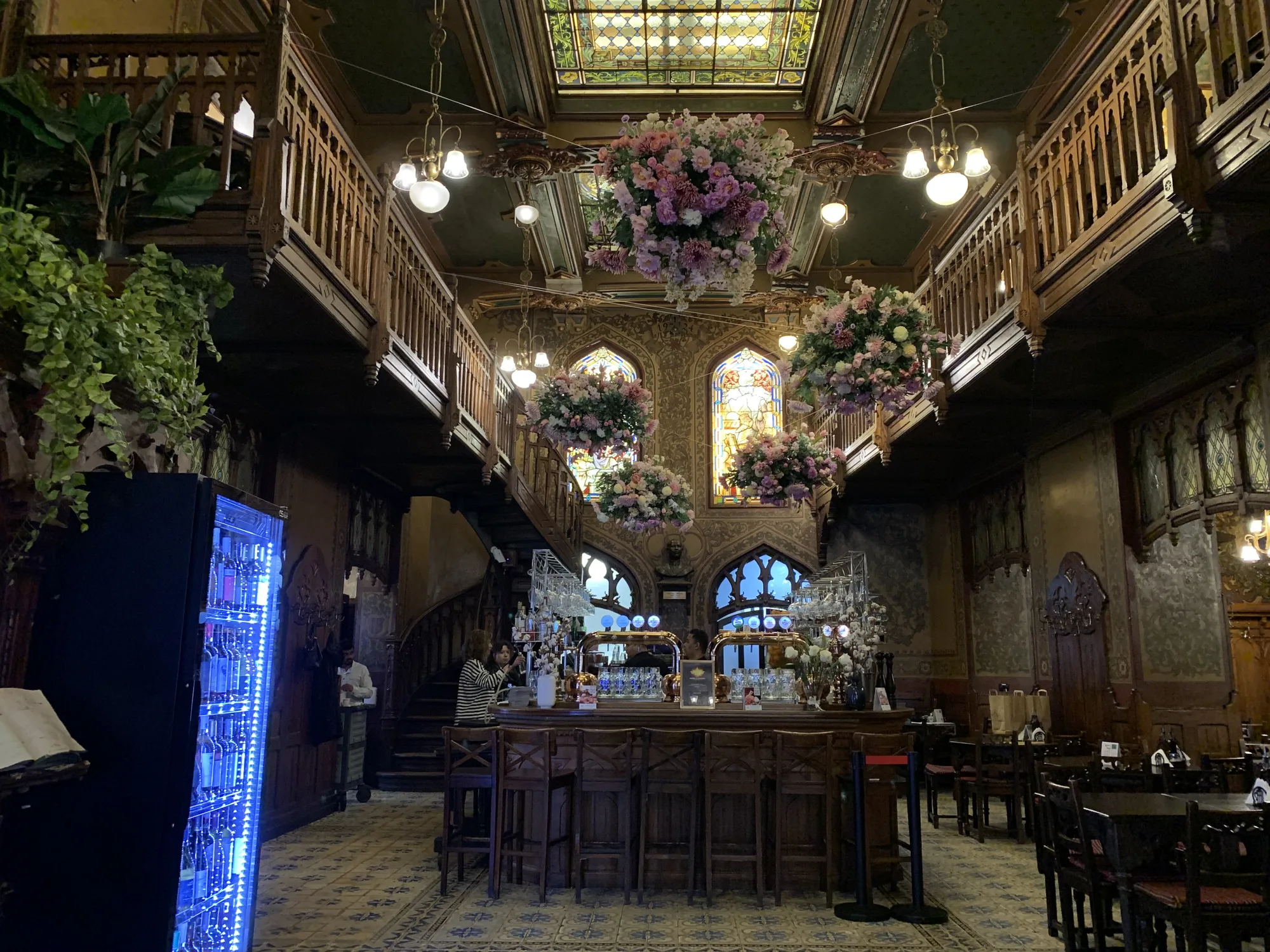
Coffee Culture
Best Coffee Shops in Bucharest
Discover Bucharest's thriving specialty coffee scene and best cafes
Reviewed April 2026 · Love Bucharest editorial team
Photo: Toa Heftiba / Unsplash
Bucharest's Coffee Revolution
In barely a decade Bucharest has gone from an instant-coffee city to a genuine specialty-coffee destination. Third-wave roasters, expert baristas and beautifully designed cafés now rival Western-European capitals — at a fraction of the price. The guide below covers the rooms worth planning around, what to order, what it costs, and how to make a coffee day flow.
How Bucharest's coffee scene came of age
For a long time, coffee in Romania meant either a tiny Turkish-style cup or, in the 2000s, an instant brew at home and a sweet, milky chain drink out. That changed sharply from the early 2010s. The turning point is usually dated to 2013, when Origo opened on Strada Lipscani in the Old Town and brought single-origin beans, careful extraction and an espresso bar built around quality rather than syrup. It worked, and a wave followed.
Today Bucharest has its own roasteries, barista training labs and award-winning roasters — BOB Coffee Lab's house roaster has held a World Coffee Roasting Championship title — and a network of cafés that pour their own and each other's beans. The result is a small but serious ecosystem: you can order a flat white that holds up against anything in Berlin or Vienna, then sit with a V60 pour-over of an Ethiopian single origin for the price of a supermarket sandwich back home.
For visitors, the practical upshot is simple. Specialty coffee here is genuinely good and still cheap — a flat white usually runs in the ~12–18 lei range, a few lei above a chain. Mornings are the calmest time; by mid-afternoon the most central rooms fill up, and a couple (Origo included) hand over to a cocktail crowd in the evening. Cards are accepted almost everywhere, but it is worth keeping a few coins for a warm covrig from a street kiosk to eat alongside.
Geography helps you plan. The Old Town packs the most famous names into a few walkable lanes — Origo and the Cărturești Carusel bookshop café both sit on Strada Lipscani. Just north, around Piața Amzei and Piața Romană, the cafés lean brighter and brunch-led (M60) or cosy and tea-forward (Camera din Față). West, by Cișmigiu Gardens, Beans & Dots offers the most space. And in the residential districts — Dorobanți, Cotroceni, Floreasca — you find the calmest neighbourhood rooms, where regulars linger over homemade cake. A good coffee day rarely needs more than two or three of these; the pleasure is in slowing down, not collecting stamps.
How to use this list
Pick one café near your morning plans, then keep one backup nearby. The best coffee days are un-rushed — quality first, then a walk.
Best for planning
Use cafés as anchors: start at one, do a museum or an Old Town loop, then reset with a second stop later in the day.
Quick order cheat sheet
- • Espresso-based classics for speed
- • Filter / pour-over for slow mornings
- • Covrig + coffee for a simple breakfast
Origo
Old Town (Strada Lipscani)
Bucharest's original third-wave coffee shop, open since 2013, and the place that effectively started the city's specialty scene. The team roasts African and South American beans off-site and brews them with V60, Aeropress, Chemex and siphon as well as a serious espresso bar. By day it is a specialty coffee room; in the evening it turns into a busy cocktail bar.
M60
Piața Amzei
A light-filled, design-led café near Piața Amzei that is as well known for brunch — avocado toast, carrot cake — as for its coffee. Bright and minimalist, it is a natural morning anchor before walking into the centre.
BOB Coffee Lab
Central
A lab-minded roastery with an almost scientific approach to extraction. The house roaster has held a World Coffee Roasting Championship title, and the beans are roasted in-house — a stop for people who want to taste coffee treated as craft.
STEAM Coffee Shop
Central
A small, friendly specialty bar pouring Origo-roasted coffee. Compact and welcoming, it is a favourite with remote workers and anyone who wants a quick, high-quality cup without ceremony.
Beans & Dots
Near Cișmigiu (Universul building)
A large, spacious specialty café in the historic Universul building by Cișmigiu Gardens. It has poured beans from respected European roasters, and the room is roomy and work-friendly — good for a longer sit.
Camera din Față
Near Piața Romană
A cosy, English-tearoom-style room near Piața Romană with a big tea selection alongside coffee, pies and cakes. The calm, living-room feel makes it an ideal rainy-day refuge.
Bistro Carusel (Cărturești Carusel)
Old Town (Strada Lipscani 55)
The top-floor café inside the white-galleried Cărturești Carusel bookshop, set in a restored former Chrissoveloni bank under a glass roof. Espresso, loose-leaf tea, pastries and cake with one of the most photogenic interiors in the centre.
A neighbourhood specialty café
Dorobanți / Cotroceni style
Beyond the headline names, residential pockets like Dorobanți and Cotroceni hide calmer specialty rooms with homemade cakes and an unhurried, local feel — worth seeking out when the centre feels too busy.
Café openings, hours and menus change often. Use the names above as a curated starting list and confirm hours on your travel dates.
What to order
You can keep it as simple as a great flat white, or dig into the city's filter-brewing side. Here is what to ask for and what it costs.
Flat white or cappuccino
The default order in any specialty room. Expect a flat white to land roughly in the 12–18 lei range — a little above a chain, but the milk work and bean quality justify it. Espresso is cheaper; the baristas will happily talk you through the day's beans.
Filter / pour-over
For a slower morning, ask for a filter or pour-over of a single-origin bean. Roasteries like Origo and BOB brew with V60, Aeropress, Chemex and siphon, so this is where the city's coffee really shows off. Rarer beans cost a touch more.
A covrig on the side
The covrig is Romania's twisted, oven-fresh street pretzel — softer and bigger than the German kind. A plain one is around a leu, sesame, poppy-seed or filled versions roughly 1.5–3 lei, sold from corner kiosks (the Covrigăria Luca chain has several central spots). Grab one warm to go with your coffee.
Make it a “coffee + walk” day
If you're only here for a short visit, don't spend the day zig-zagging. Pick a café, then do one walkable cluster (Old Town lanes, a park loop, or a museum strip), then end with a second café stop.
Frequently asked questions
How much does a coffee cost in Bucharest?
Specialty coffee sits a little above chain prices. A flat white commonly lands in the ~12–18 lei range, with espresso cheaper and pour-overs of rarer single-origin beans a touch higher. It is still excellent value compared with Western-European capitals. Pay in lei.
Is Bucharest actually good for specialty coffee?
Yes — genuinely. The third-wave scene took off when Origo opened on Strada Lipscani in 2013, and the city now has its own roasteries, training labs and award-winning roasters. The quality holds its own against Prague, Budapest and Warsaw.
Where is the best coffee in the Old Town?
Origo (the original third-wave shop) is right on Strada Lipscani, and Bistro Carusel sits on the top floor of the Cărturești Carusel bookshop nearby. For brunch-plus-coffee, M60 near Piața Amzei is a short walk from the centre.
Do Bucharest cafés take cards?
Almost all specialty cafés take cards, and many are card-first. Carry a little cash for tips, the smallest kiosks and a covrig on the go. Decline dynamic currency conversion so you are charged in lei rather than a marked-up euro rate.
What should I order if I don't want milky coffee?
Ask for an espresso, an Americano, or a filter/pour-over of the day's single-origin bean. The roastery-cafés (Origo, BOB Coffee Lab) take filter brewing seriously, so a black coffee here is a highlight rather than an afterthought.
Are Bucharest cafés good for working on a laptop?
Some are, especially the larger rooms like Beans & Dots, and STEAM is popular with remote workers. Mornings are calmest. For a dedicated work session with reliable seating, see our separate guide to the best work-friendly cafés.
Explore More