Bucharest rewards the culturally curious like few capitals its size — and at remarkably accessible prices. A single day can take in a Belle Époque concert hall, a former royal palace full of Old Masters, an open-air museum of relocated peasant farms, and the monumental Palace of the Parliament. The collections are serious, the buildings often as memorable as what they hold, and ticket prices a fraction of what you would pay in Paris or Vienna. Here are the cultural attractions most worth your time, with honest notes on what to see, how long to set aside, and the closing days that trip people up.
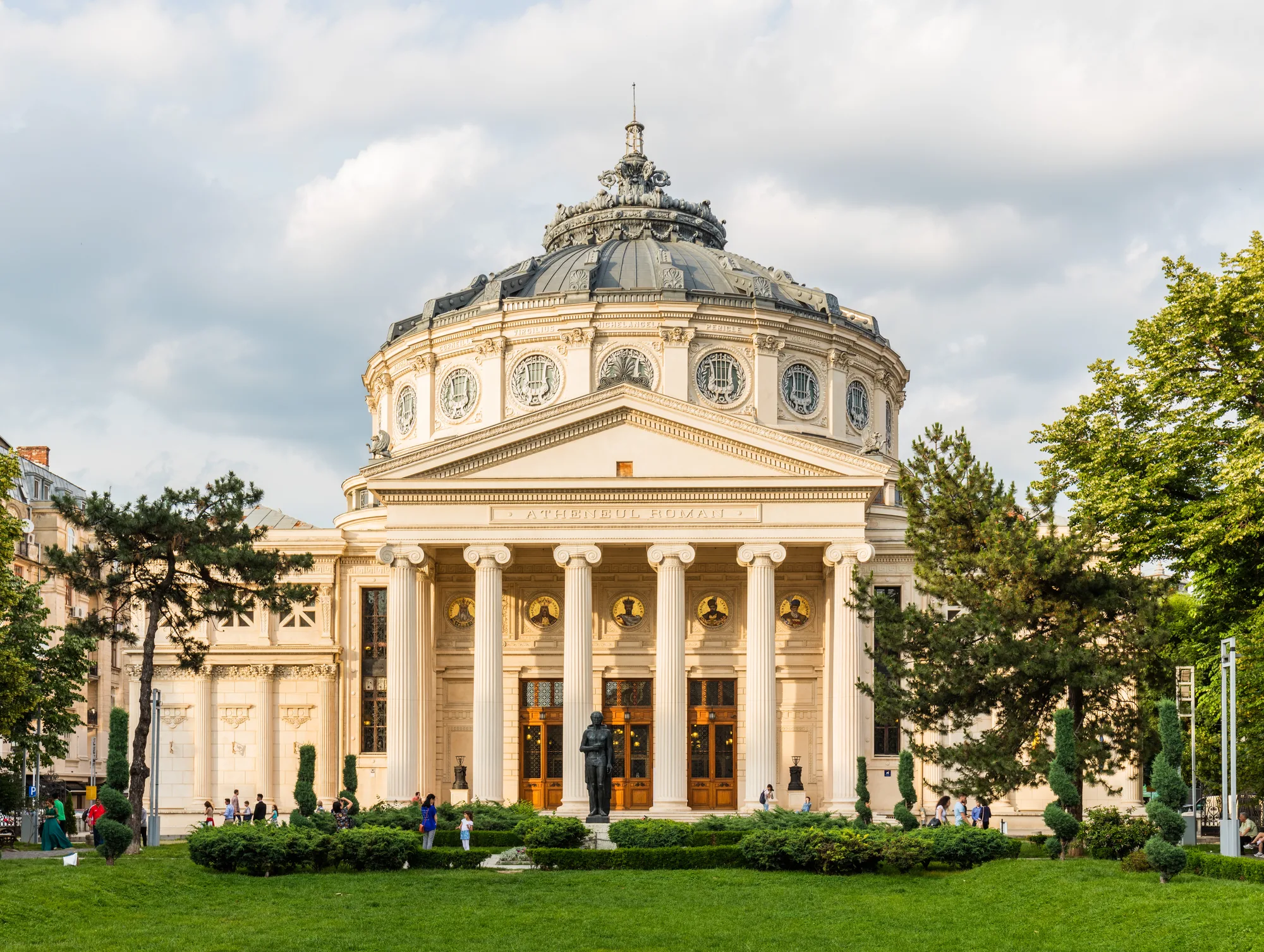
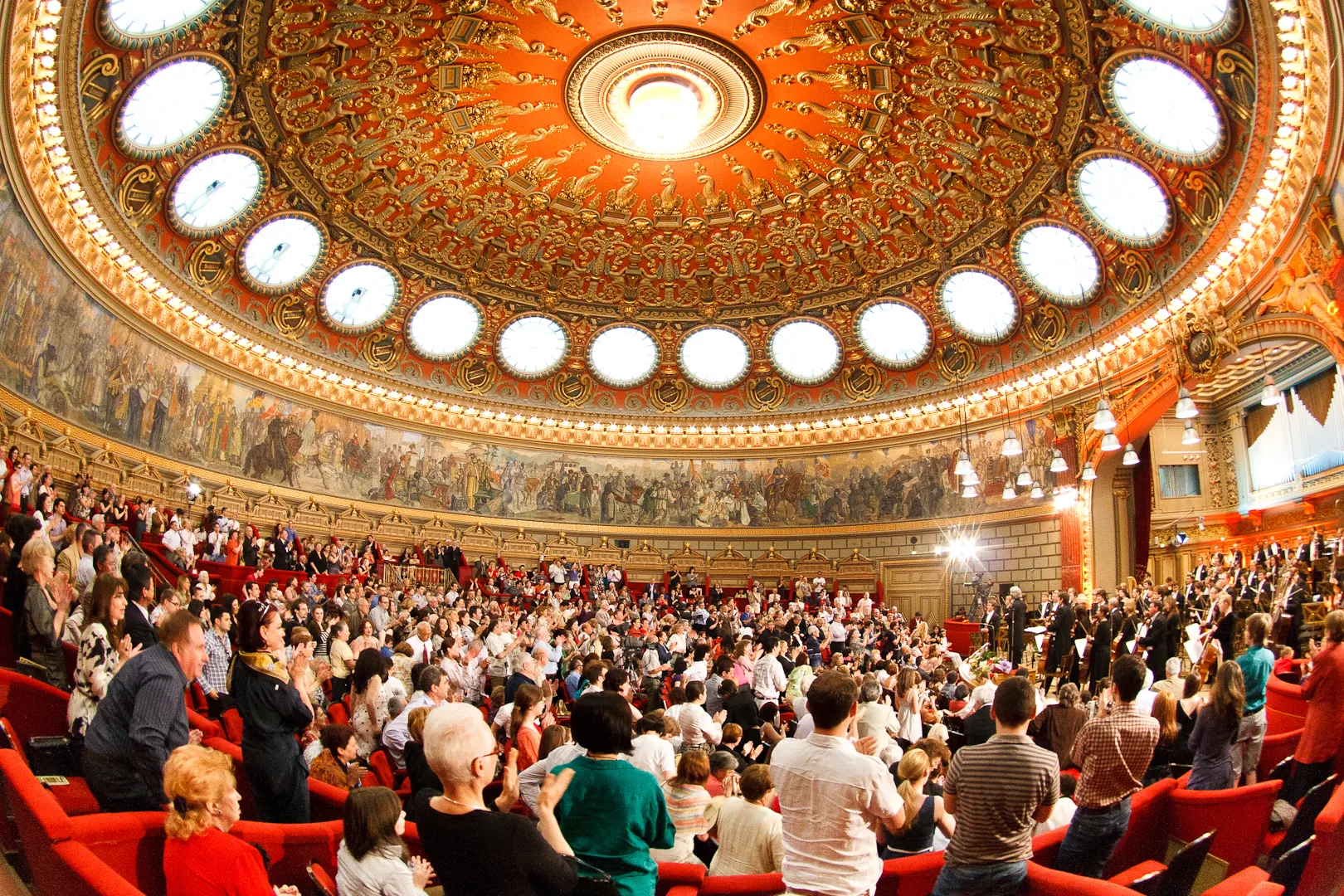
The most beloved building in Bucharest and the symbol of the city's cultural life. Opened in 1888 and funded partly by a famous public subscription — “Dați un leu pentru Ateneu” (“Give a leu for the Athenaeum”) — this neoclassical concert hall is home to the George Enescu Philharmonic. Its domed circular auditorium is wrapped in a vast fresco depicting Romanian history, and the acoustics are superb. It is the principal venue of the George Enescu Festival and Competition.
Highlights
✦Neoclassical rotunda and grand foyer
✦Sweeping historical fresco inside the hall
✦Home of the George Enescu Philharmonic
✦A daytime self-guided visit is possible between events
Housed in the former Royal Palace on Revolution Square, this is Romania's flagship art museum, split into two great wings. The National Gallery covers medieval and modern Romanian art — including the luminous landscapes of Nicolae Grigorescu, the brooding canvases of Theodor Aman and Ștefan Luchian, and early sculpture by Constantin Brâncuși — while the European Gallery holds Old Masters and 19th-century painting from the former royal collection, with works in the circle of Rembrandt, Rubens, El Greco, Tintoretto and the Impressionists. The palace setting itself, with its grand staircase and throne hall, is half the experience, and the building still carries the scars of the 1989 revolution that played out on the square outside.
Highlights
✦Set in the former Royal Palace
✦Brâncuși and Grigorescu in the Romanian gallery
✦European Old Masters collection
✦Right on historic Revolution Square
One of Europe's great open-air museums, founded in 1936 on the shore of Herăstrău (King Mihai I) Park. More than 300 authentic peasant houses, wooden churches, watermills and farmsteads were brought here from every region of Romania and reassembled, so a walk through it is effectively a walk across the whole country's rural architecture. Wonderful for families and an easy combine with a park stroll.
Highlights
✦300+ relocated traditional buildings
✦Wooden churches and regional farmsteads
✦Crafts demonstrations and seasonal fairs
✦On the edge of Herăstrău Park
A celebrated ethnographic museum — once named European Museum of the Year (1996) — that tells the story of rural Romania through textiles, icons, ceramics, painted eggs, wooden crosses and entire reassembled peasant interiors, including a transplanted wooden church. Its curation, shaped by the painter and museographer Horia Bernea, is famously poetic and associative rather than encyclopedic: objects are arranged for feeling and meaning as much as chronology. There is a much-loved shop selling genuine folk crafts and a characterful basement café. It sits opposite Piața Victoriei, beside the Antipa museum.
Highlights
✦Award-winning ethnographic collection
✦Traditional textiles, icons and crafts
✦Atmospheric, idiosyncratic displays
✦Excellent gift shop and café
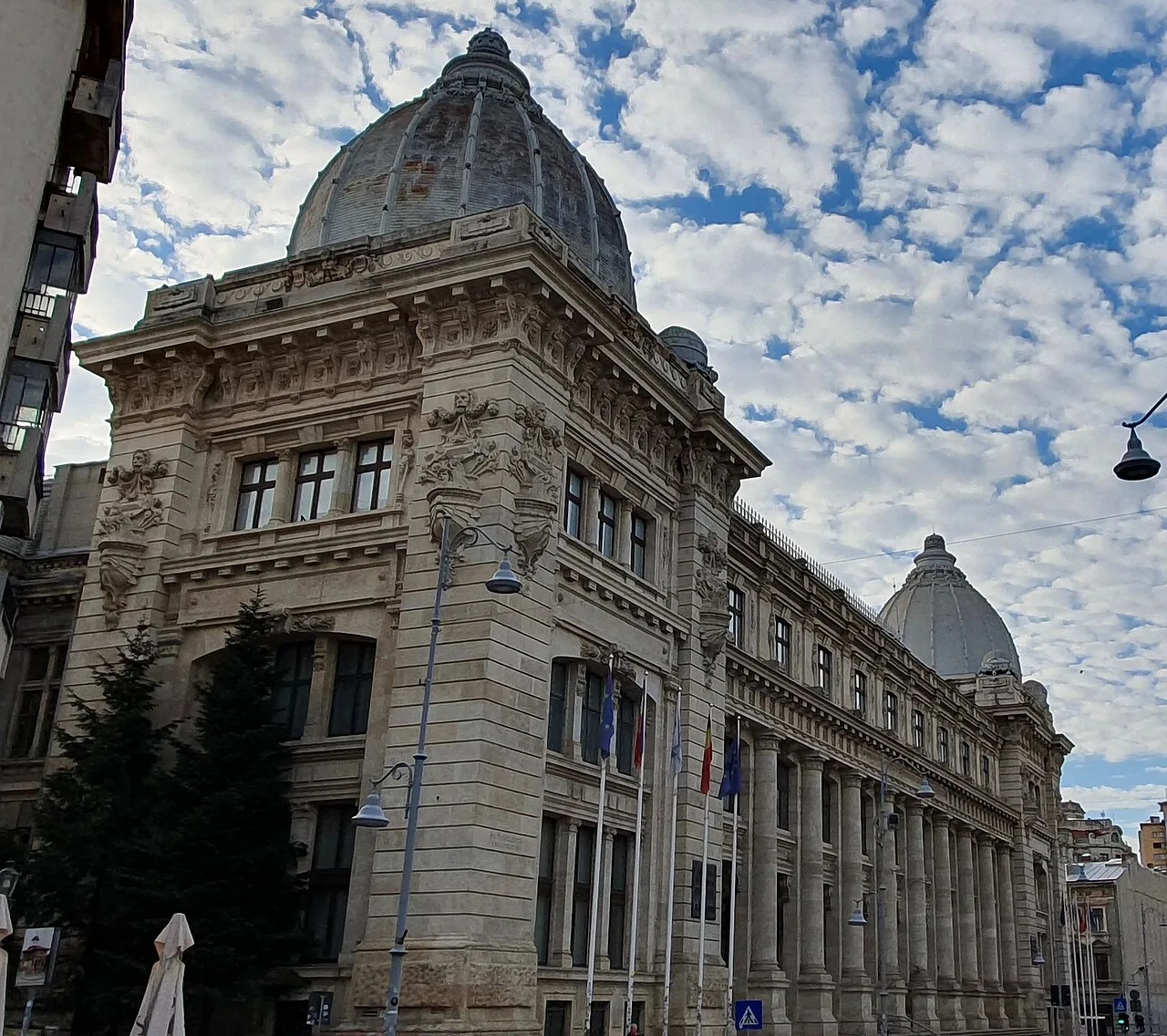
On Calea Victoriei in the grand former Post Office Palace, this is the place for the long sweep of Romanian history. Its star draws are the dazzling Historical Treasury — more than 3,000 pieces of gold, precious stones and royal regalia spanning prehistory to the modern kingdom, including the Romanian Crown Jewels and the spectacular fourth-century-BC Pietroasele hoard ("the Hen with the Golden Chicks") — and a full-size plaster cast of Trajan's Column, the Roman monument that records the conquest of Dacia, displayed in sections at eye level so you can actually read the reliefs that you would only squint at in Rome.
Highlights
✦The Historical Treasury and Crown Jewels
✦Full-size cast of Trajan's Column
✦Dacian gold and ancient artefacts
✦Imposing Calea Victoriei building
Bucharest's most monumental sight and one of the largest administrative buildings on earth, raised in the 1980s under Nicolae Ceaușescu. The scale is the point — endless marble corridors, vast halls, and a story that explains a great deal about modern Romania. It can only be seen on a guided tour, with photo ID required at security, and it makes a powerful, if sobering, cultural anchor for a day.
Highlights
✦One of the world's largest buildings
✦Marble halls and chandeliers on a colossal scale
✦Guided-tour-only access
✦A defining chapter of 20th-century history
A handsomely modernised natural history museum near Piața Victoriei, a firm favourite with families. It is best known for its dioramas and its complete Deinotherium skeleton — a giant prehistoric relative of the elephant — alongside extensive zoology, geology and ethnography collections presented with genuinely good interpretation.
Highlights
✦Deinotherium skeleton and fossil halls
✦Immersive wildlife dioramas
✦Family-friendly, well laid out
✦Beside the Museum of the Romanian Peasant
West of the centre in the genteel Cotroceni district, this is one of the city's most rewarding and least crowded cultural visits — a former royal residence built for Crown Prince Ferdinand and Princess Marie in the 1890s, on the site of a 17th-century monastery founded by Prince Șerban Cantacuzino. Today it is a museum sharing the grounds with the Romanian President's offices, so it is seen on a guided tour only, with photo ID checked at the gate. The interiors are a sumptuous tour through royal taste — Art Nouveau, Neo-Romanian and Florentine-inspired rooms, Queen Marie's famous Norwegian and golden bedrooms — and the longer tour adds the medieval cellars and the rebuilt monastery church.
Highlights
✦Guided tours of the royal apartments
✦Queen Marie's celebrated interiors
✦Medieval cellars and monastery church
✦In leafy, villa-lined Cotroceni
A tiny, perfect jewel hidden among the bars of the Old Town — a 1724 church and monastery in the late-Brâncovenesc style, all the more startling for its setting. Behind a modest façade lies an exquisitely carved stone portal, a frescoed interior, and a serene arcaded courtyard ringed with old tombstones and carved-stone fragments rescued from churches demolished under communism. The small community of nuns maintains one of the country's most important collections of Byzantine choral music and a remarkable old-book library. It is free, active, and a moment of genuine calm a few steps from the city's noisiest lanes.
Highlights
✦Exquisite 1724 Brâncovenesc carving
✦Frescoed interior and arcaded courtyard
✦Active monastery with Byzantine chant
✦Free to visit, in the heart of the Old Town
Romania's flagship contemporary-art museum occupies a wing of the Palace of the Parliament — a deliberately provocative pairing of cutting-edge art with the most monumental relic of the communist regime. The galleries spread over several floors of clean white space carved into the colossus, showing rotating exhibitions of Romanian and international contemporary art, photography, video and installation, with a top-floor café and terrace offering an unusual view back over Ceaușescu's grand boulevard. It is a sharp, often political counterpoint to the city's belle-époque and royal collections.
Highlights
✦Contemporary art inside the Palace
✦Rotating exhibitions and installations
✦Top-floor café with city views
✦A pointed dialogue with the building
Not everything cultural is behind a ticket desk. The CEC Palace on Calea Victoriei — a glorious 1900 Beaux-Arts building with a glass-and-steel dome — is one of the city's photographic icons (admire it from outside). Nearby, the covered Pasajul Macca-Vilacrosse, with its yellow glass roof, and the Stavropoleos Monastery in the Old Town, a jewel of 18th-century Brâncovenesc craftsmanship, round out a free, open-air culture walk.
Highlights
✦CEC Palace's landmark domed façade
✦Pasajul Macca-Vilacrosse's glass arcade
✦Stavropoleos Monastery's carved courtyard
✦All free to admire on foot
Bucharest is a genuinely great city for a night at the theatre, the opera or a concert — partly because the programming is strong, and partly because tickets are a fraction of Western-European prices. The Athenaeum is the showpiece, but the National Opera and the city\'s independent stages are well worth a look too.
Classical concerts (George Enescu Philharmonic)
Book ahead and dress smart; the city's signature night out.
Opera and ballet
Tickets are very affordable by Western-European standards.
Romanian drama
A large modern complex near Universitate; mostly in Romanian.
Alternative and fringe performance
Check current listings; a lively, experimental scene.
Turn these landmarks into a clean plan with our deeper guides