Old Town Photo Highlight
Macca-Vilacrosse Passage
Best time for photos, what to do inside, and how to build it into a perfect Old Town loop.
Reviewed April 2026 · Love Bucharest editorial team
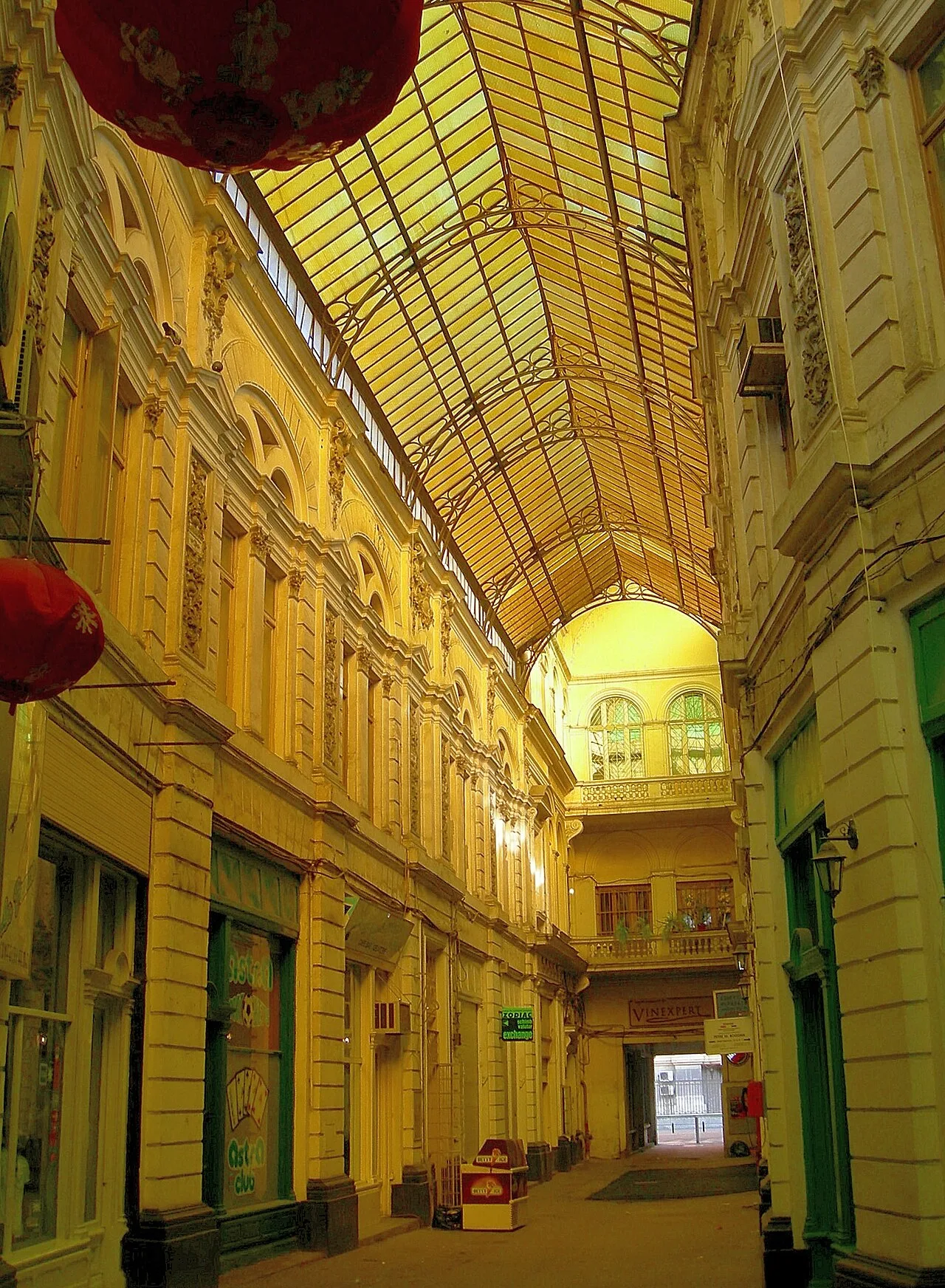
Photo: Joe Mabel · CC BY-SA 3.0 · Wikimedia Commons
Bucharest’s most atmospheric covered passage
Pasajul Macca-Vilacrosse is one of those small details that makes a city memorable. The yellow glass creates a warm glow, cafés sit inside the passage, and a short walk through it feels like stepping into a different mood.
The story behind the yellow glass
The passage is not just photogenic — it has a genuinely good backstory. A little history makes the walk through it far more rewarding.
A Parisian-style arcade, opened in 1891
Pasajul Macca-Vilacrosse opened in 1891, designed by the architect Felix Xenopol in the grand European tradition of covered shopping passages then sweeping Paris, Milan and Naples. It was built on the site of the former Câmpineanu Inn and named after two former owners of the land — the chief city architect Xavier Villacrosse and the merchant Mihalache Macca. With its yellow-tinted glass roof, it remains one of the most evocative survivals of belle-époque “Little Paris” Bucharest.
Why it forks into a Y
The passage has an unusual two-tined, fork (Y) shape — and there is a story behind it. The hotel that stood in the middle of the plot (the Pesht / Hotel Stănescu) refused to sell, so the arcade was simply built around it, splitting into two arms. One arm meets Calea Victoriei; the other heads toward the National Bank in the Lipscani quarter. That quirk is exactly why the symmetry looks so striking in photos.
From stock exchange to shisha bars
In its early decades the passage was a hub of commerce — it once hosted Bucharest’s first stock exchange — and under communism it was renamed Pasajul Bijuteria (“the Jewellery Passage”), only later restored to its original name. Today the warm-lit arcade is lined with cafés, restaurants and a cluster of hookah (shisha) bars, giving it a slightly bohemian, almost Levantine atmosphere unlike anywhere else in the centre.
The light is the attraction
The yellow-glass roof creates a warm glow that makes the passage feel like a different city — especially on cloudy days.
It is a perfect micro-highlight
You can enjoy it in 10 minutes or stay for a coffee. It fits into any Old Town day without effort.
It is one of the most photogenic places in the center
Symmetry, warm tones, and a “Paris-meets-Bucharest” feeling make it a photo favorite.
Best time to visit
Morning for photos
Fewer people, cleaner symmetry, and calmer cafés.
Late afternoon for atmosphere
The passage feels warm and inviting as the day softens.
Avoid peak crowds
Busy hours can make photos difficult. If it is packed, take one quick shot and return later.
What to do (beyond the photo)
Walk through slowly (look up)
The ceiling and the glow are the main show. Let it be a slow 2-minute walk, not a rushed pass-through.
Stop for a coffee
A café stop turns it into a moment rather than a photo-only checkmark.
Use it as a route connector
The passage is best as part of an Old Town loop: bookstore → passage → monastery → lunch.
Build one photo “anchor” per day
Pair this with one other intentional photo spot and then stop chasing photos. The day feels better.
Photo tips (get the shot fast)
Pair it with these (best Old Town loop)
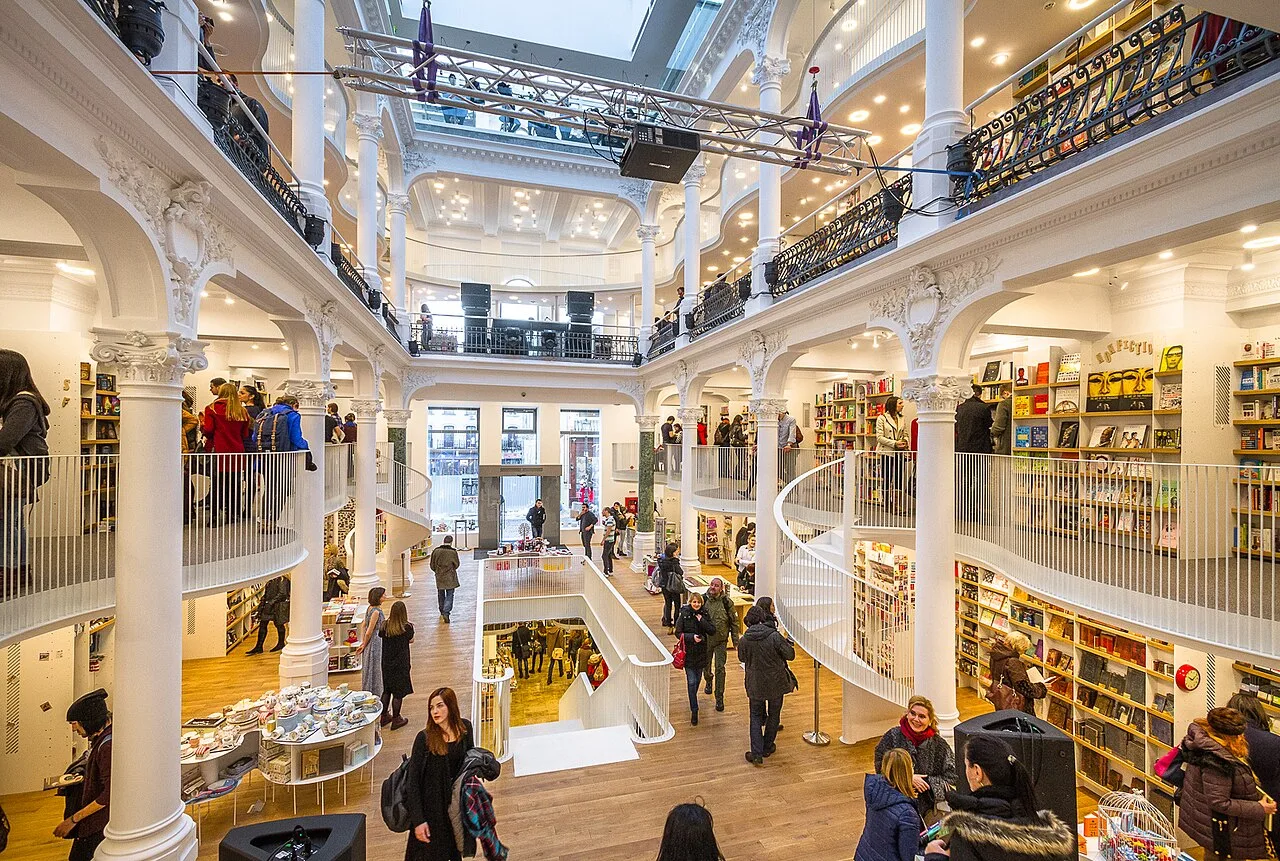
Carturești Carusel
Two iconic interiors close together: bright white bookstore + warm yellow passage.
Bookstore guide →Old Town cafés and lunch
Finish the loop with a courtyard café and a meal away from the loudest streets.
Old Town cafés →Frequently asked questions
Does it cost anything to visit?
No — the passage is a public, covered street, so walking through is completely free and open at any time. You only pay if you stop for a coffee, a meal or a shisha at one of the venues inside.
Where is it and how do I find it?
It sits just off Calea Victoriei in the central Old Town, with one entrance near the boulevard and the other toward the National Bank in Lipscani. It is easy to walk past, so look for the covered, yellow-glass arcade between the buildings; it is a couple of minutes from Cărturești Carusel and the National History Museum.
When is the best time to visit for photos?
Early morning gives the cleanest symmetry and the fewest people. Overcast days are surprisingly good, because diffused light through the yellow glass creates an even, golden glow. Late afternoon is most atmospheric for the cafés. Avoid peak midday crowds if a clean shot matters.
How long should I spend there?
As a photo stop, 10 minutes is plenty. If you settle in for a coffee or a shisha, you can easily linger an hour. It works best as a short, atmospheric link in a longer Old Town walk rather than a standalone destination.
Why is the passage shaped like a fork?
When it was built in 1891, the hotel in the middle of the plot would not sell, so the architect built the arcade around it — splitting it into two arms that meet at a fork. One arm leads to Calea Victoriei, the other toward the National Bank.
Why is the glass yellow?
The roof uses yellow-tinted glass, a deliberate period choice that bathes the whole passage in a warm, amber light. That glow is the main reason it photographs so beautifully and feels like a different city the moment you step in.
Is it worth going inside the cafés or shisha bars?
For the atmosphere, yes — a coffee under the glass roof turns a quick photo into a proper moment, and the shisha bars give the passage its distinctive late-day character. Prices are modest; pay in lei and check the menu before ordering, as in any central tourist spot.
What should I combine it with?
It slots neatly into an Old Town loop: pair it with the white-galleried Cărturești Carusel bookshop, the 1724 Stavropoleos Monastery courtyard, and a meal a street or two off the busiest lanes for the best mix of beauty and calm.
Keep exploring Old Town
The best Old Town day is a chain of small highlights: one passage, one courtyard, one café, one great meal.