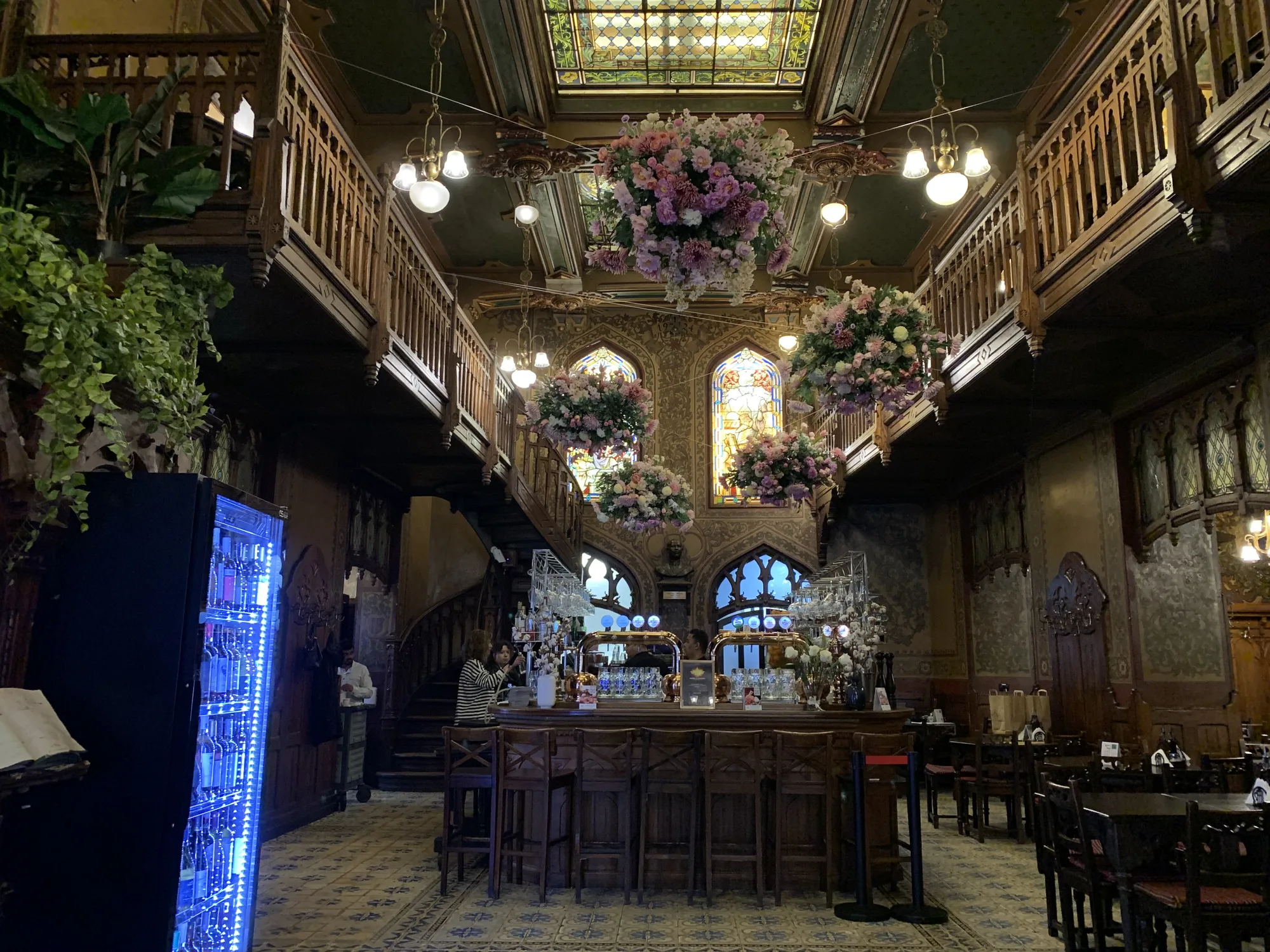
Lipscani has amazing meals and underwhelming meals, often on the same street. The difference is not luck — it is strategy: pick the experience, avoid the most tourist-optimized corners, and keep the plan simple.
Note: restaurant openings and menus change often. This guide is written to stay useful even as the scene evolves (as of February 10, 2026).
Bucharest's Old Town (Lipscani / Centrul Vechi) is a small grid of cobbled, mostly pedestrian lanes — historically the city's trading quarter, named after the Leipzig merchants who sold here centuries ago. That history is exactly why the dining is so uneven: the same few streets hold genuine institutions and pure tourist traps, sometimes side by side. The good news is that the difference is predictable, not random, so a little strategy goes a long way.
The headline rooms are the historic ones. Caru' cu Bere, the grand beer hall open since 1879, and Hanu' lui Manuc, set in an early-19th-century caravanserai with a galleried courtyard, are landmarks worth the occasion (and worth booking). Around them sit traditional taverns serving Romanian comfort food, a growing band of modern Romanian bistros toward the Calea Victoriei edge, casual side-street kitchens for sightseeing days, and seasonal terraces and rooftops. Knowing which you want before you set out is most of the battle.
Prices are gentle by Western-European standards: mid-range mains run roughly 50–120 lei, a full meal lands around 150–200 lei a head before drinks, and casual plates can be 35–45 lei. The traps cluster on the loudest bar streets — Smârdan, Gabroveni and the busiest stretch of Lipscani — where hosts wave huge multi-cuisine menus at passers-by. Step one or two streets back, or just outside the quarter, and both the food and the value improve sharply. Lunch is calmer and often better value than a peak-time weekend dinner.
Combine dinner with the right walks, cafés, and night-time routes — the details make Old Town feel magical instead of chaotic.