Bucharest is a city of distinct quarters, and the area you base yourself in shapes the whole trip. The cobblestone Old Town puts nightlife and sights on your doorstep; the leafy north (Dorobanți, Floreasca, Aviatorilor) trades buzz for the city's best dining and the biggest park; grand Calea Victoriei is the romantic, architectural spine; residential Cotroceni offers villa-lined calm; and monumental Piața Unirii anchors the transport network. This guide walks each neighborhood's character, what to see, who it suits, where to eat and stay nearby, and how to get around — then matches areas to travel styles so you can pick with confidence.
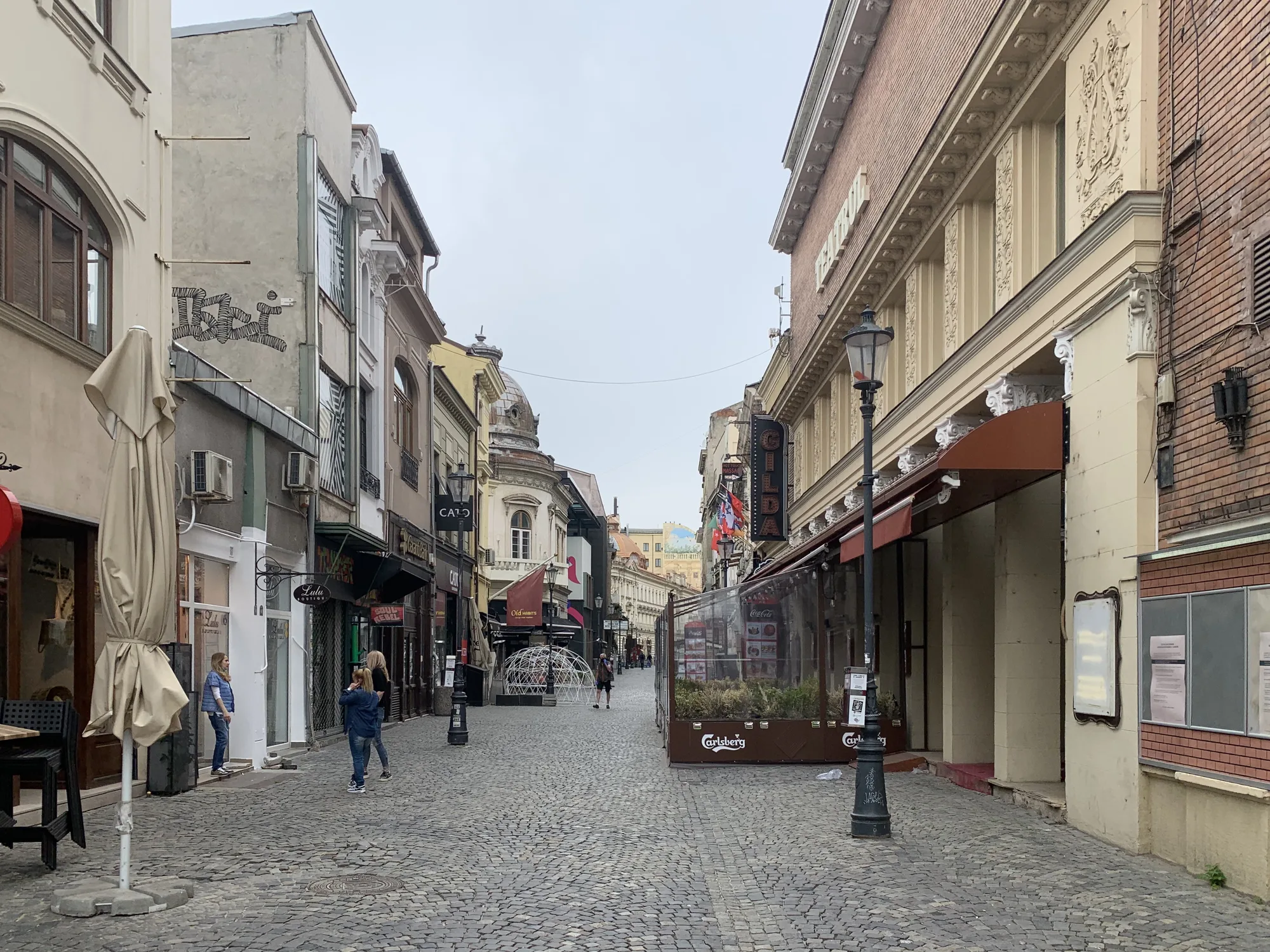
The historical heart of Bucharest, Lipscani is a vibrant maze of cobblestone streets lined with restored 19th-century buildings. The medieval street grid — Lipscani, Smârdan, Franceză, Covaci — is now pedestrian-friendly and packed with bars, cafés and restaurants. It is the city's densest concentration of nightlife and the easiest base for first-timers, though prominent terraces carry tourist markups; step a street or two back for better value.
Best For
First-time visitorsNightlife loversHistory enthusiastsWalkers
Highlights
✦Stavropoleos Monastery — a tiny Brâncovenesc-style gem from 1724
✦Pasajul Macca-Vilacrosse — the yellow glass-roofed passage
✦Hanul lui Manuc — a galleried inn courtyard from the early 1800s
✦Cărturești Carusel — a striking white bookshop on Strada Lipscani
✦Hundreds of bars and restaurants within walking distance
Staying here
Great if you want everything on your doorstep and do not mind weekend noise — ask for a quieter room or a courtyard-facing side, and bring earplugs for a Friday or Saturday night. Hostels, boutique hotels and apartments are abundant at every price point, and the famous Caru' cu Bere beer hall, Cărturești Carusel and dozens of terraces are all within a few minutes' walk.
Getting around
Walkable to most central sights; the Universitate and Piața Unirii metro stations sit on either edge, and Calea Victoriei and Cișmigiu are a short stroll away.
Atmosphere
Charming and historic by day, the liveliest nightlife quarter in the city after dark — energetic, especially on weekends.
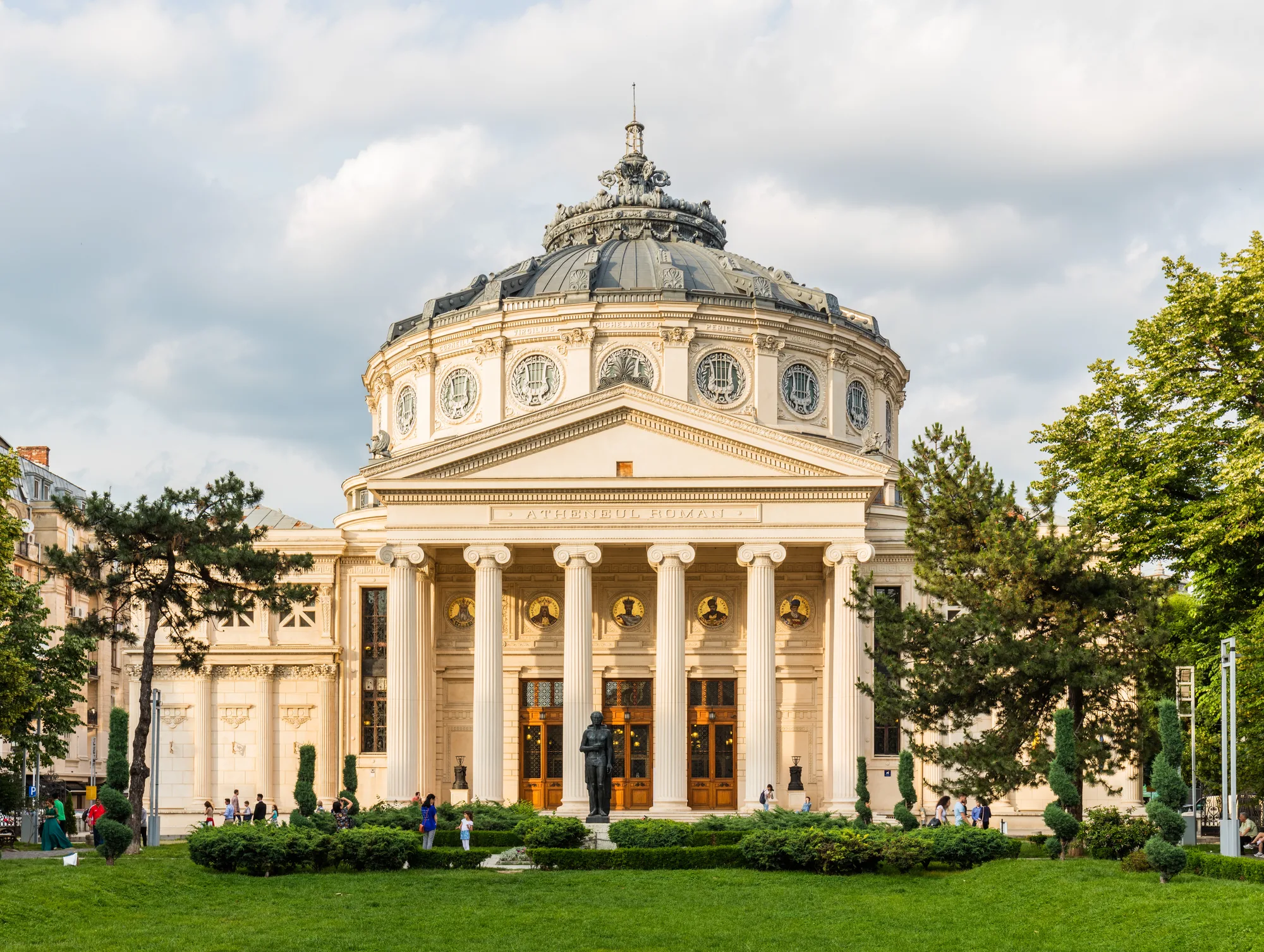
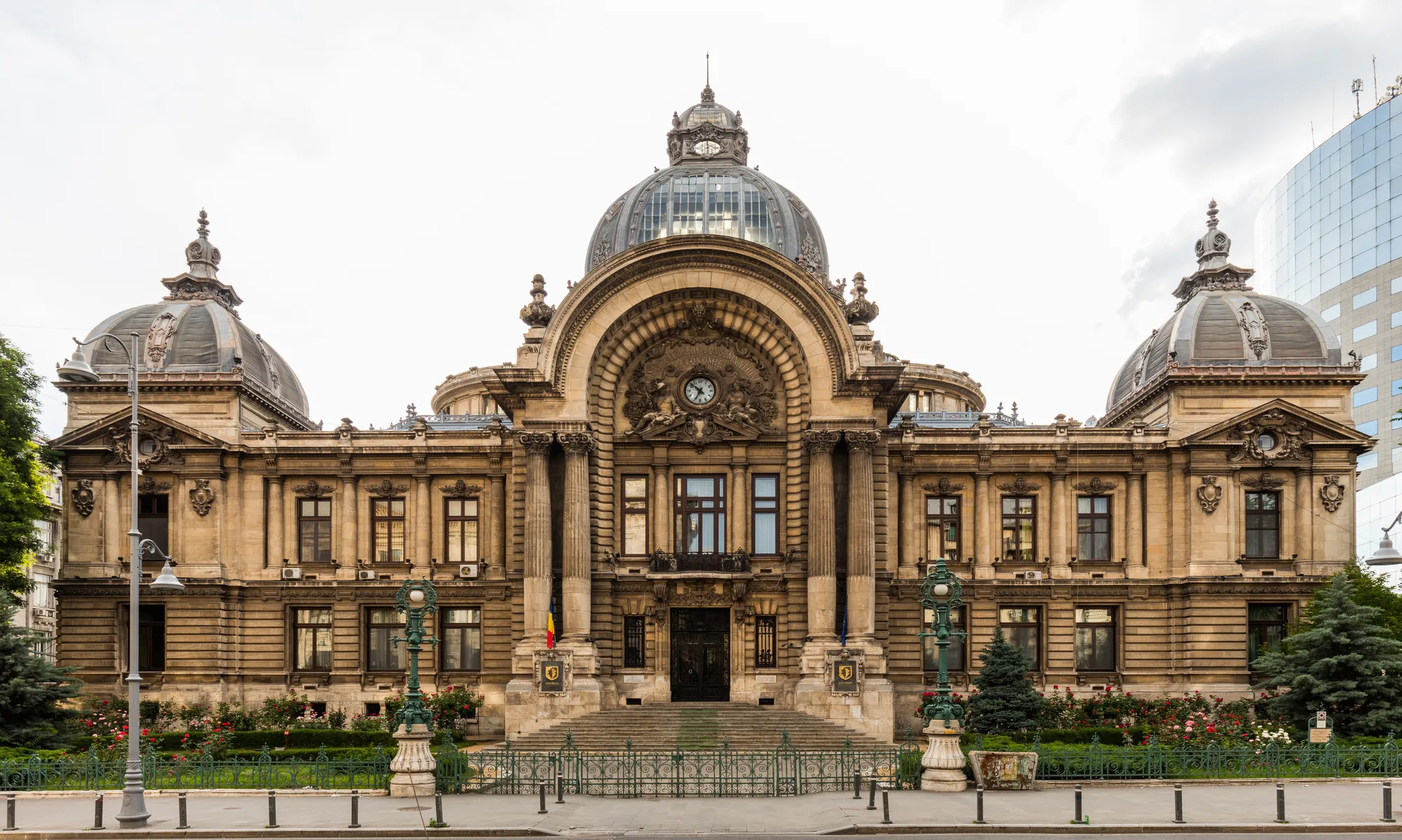
Named after Bucharest's most storied boulevard, this central spine runs roughly 2.7 km past the city's grandest landmarks. The street is an architectural journey — belle-époque facades, art-deco frontages, communist-era blocks — lined with museums, terrace cafés and elegant shops. It is the romantic, photogenic core, particularly beautiful at dusk when the historic buildings light up.
Best For
Architecture enthusiastsCulture seekersRomanticsPhotographers
Highlights
✦Romanian Athenaeum — the neoclassical concert hall
✦National Museum of Art of Romania (former Royal Palace)
✦Revolution Square — site of the 1989 revolution
✦Casa Capșa — a café/patisserie institution since 1852
✦Cărturești and elegant terraces for people-watching
Staying here
A refined, central base with grand architecture and easy access to museums; quieter than the Old Town at night while staying within a short walk of it.
Getting around
Highly walkable along the boulevard; Piața Romană, Universitate and Victoriei metro stations bracket the area.
Atmosphere
Elegant and stately, a living museum of the city's architectural evolution — at its best in the evening light.
Part of the upscale residential core north of the center, Dorobanți is leafy, polished and home to one of the highest concentrations of good restaurants in the city. Tree-lined streets mix art-deco villas and modern apartments, with chic boutiques, artisan bakeries and specialty coffee. It attracts affluent locals and expats and trades nightlife buzz for a calm, cosmopolitan feel.
Best For
FoodiesQuiet-but-central seekersShoppersLonger stays
Highlights
✦One of the strongest dining scenes in Bucharest
✦Specialty coffee culture and artisan bakeries
✦Boutiques and a refined shopping feel
✦Elegant early-20th-century architecture
✦Easy reach of Herăstrău / King Mihai I Park
Staying here
A great base if dining and a quiet, residential feel matter more than being able to stumble home from the Old Town. You will use the metro or a Bolt to reach the main sights, but you wake up among some of the city's best restaurants, bakeries and coffee. Good for couples and longer stays; boutique hotels and serviced apartments dominate over hostels.
Getting around
Not walkable to the main tourist core, but well connected — metro (Aviatorilor/Ștefan cel Mare on M2) and ride-hailing make sightseeing easy, and Herăstrău Park is a short stroll north.
Atmosphere
Refined and cosmopolitan with a peaceful, leafy residential character.
Adjacent to Dorobanți and arguably the trendiest pocket of the city, Floreasca pairs upscale residential calm with a buzzy modern dining and bar scene and its own lake. It is where Bucharest's contemporary, design-conscious energy concentrates — strong restaurants, stylish cafés and the Sky Tower skyline restaurant nearby. Like Dorobanți, it is more about good living than tourist sights.
Best For
Modern dining & barsStyle-led travelersLonger or repeat visitsLakeside calm
Highlights
✦High concentration of trend-setting restaurants and bars
✦Floreasca Lake and green, residential streets
✦Sky Tower (Nor) for skyline dining nearby
✦Quiet, safe, and design-forward atmosphere
✦Close to Herăstrău Park and Dorobanți
Staying here
Best for travellers who prioritise the contemporary food-and-bar scene and a calm, lakeside base over proximity to monuments — ideal on a second visit or a longer stay. Plan on a short metro ride or a Bolt for central sightseeing, and expect stylish apartments and design hotels rather than budget rooms.
Getting around
Use the metro (Aurel Vlaicu/Ștefan cel Mare on M2) or ride-hailing; it is not within walking distance of the historic centre, but it is a quick, cheap hop.
Atmosphere
Sleek, modern and relaxed — the upscale, contemporary side of Bucharest.
An architectural gem west of the center favoured by academics and medical professionals, Cotroceni is one of the city's oldest and most charming residential neighborhoods. Quiet, tree-lined streets showcase art-deco, Neo-Romanian and modernist villas, and the Botanical Garden provides a green oasis. It is calm, cultured, and most beautiful in spring blossom and autumn colour.
Best For
Architecture loversFamiliesQuiet seekersNature enthusiasts
Highlights
✦Cotroceni Palace — presidential residence and museum (visit by guided tour)
✦Bucharest Botanical Garden — a large green retreat
✦Beautiful art-deco and Neo-Romanian villas
✦Tree-lined streets, stunning in spring and autumn
✦Near universities and major hospitals
Staying here
A lovely, peaceful base for families or anyone wanting a residential mood, with cosy cafés and bistros tucked among the villas. It is a short ride or a longer walk from the centre, so factor in a little transit time; accommodation here is mostly apartments and small guesthouses rather than big hotels.
Getting around
Metro (Eroilor on M1/M3, Politehnica) and several tram lines connect it to the centre in minutes; the neighbourhood itself is best explored slowly on foot, ideally in blossom season.
Atmosphere
Serene and prestigious, with a leafy canopy over quiet streets — the most charming residential corner of the city.
A dynamic, youthful neighborhood centred on the University of Bucharest and Piața Universității, the busy square that also doubles as a memorial to the 1989–90 demonstrations. It offers an authentic, everyday slice of the city — affordable cafés and restaurants, second-hand bookshops, the National Theatre (TNB) complex, and a mix of students and long-time residents — while sitting right beside the major central sights. The Intercontinental hotel tower marks the corner, Cișmigiu Gardens are a short walk west, and the Old Town begins just to the south. Less touristy than Lipscani, but every bit as central.
Best For
Budget travelersLocal atmosphereBook loversCentral transit
Highlights
✦Piața Universității and the historic university campus
✦Cișmigiu Gardens — the oldest public garden (laid out from the 1840s)
✦Affordable cafés and casual restaurants
✦Bookshops and student-driven cultural spaces
✦Universitate metro hub — excellent transport links
Staying here
A practical, well-priced base with superb transport and an authentic feel, a short walk from both the Old Town and Calea Victoriei. Plenty of mid-range hotels and apartments, and quieter at night than the Old Town itself.
Getting around
One of the best-connected areas in the city — the Universitate metro interchange (M2 north–south meets M1/M3 east–west) and many bus and tram lines pass through, so you can reach almost anywhere quickly.
Atmosphere
Energetic and genuine, offering a glimpse of everyday Bucharest life right in the center.
The leafy, prestigious belt strung along Șoseaua Kiseleff and Bulevardul Aviatorilor in the north, where embassies, grand villas and the Arcul de Triumf give way to the city's largest park. This is Bucharest at its most spacious and dignified — wide tree-lined boulevards, the open-air Village Museum, and King Mihai I (Herăstrău) Park with its lake, jogging loops and waterfront restaurants. It suits travellers who want green space and calm over Old-Town buzz, and it is an easy metro ride from the centre.
Best For
Park loversRunners & active daysQuiet, upscale staysFamilies
Highlights
✦King Mihai I (Herăstrău) Park — the city's biggest green space
✦Dimitrie Gusti National Village Museum on the lakeshore
✦Arcul de Triumf and grand Kiseleff boulevard
✦Embassies and elegant interwar villas
✦Waterfront cafés and boat rentals (seasonal)
Staying here
A calm, green base near the park, well suited to families and anyone who wants to start the day with a run or a lakeside coffee. Expect to use the metro or a Bolt for the central sights — it is a short hop, not a walk.
Getting around
Metro M2 to Aviatorilor sits right by the park and Village Museum; the airport express bus 100 also runs down Kiseleff toward the centre.
Atmosphere
Spacious, green and dignified — the airy, diplomatic north of the city.
The vast, fountain-lined Piața Unirii and the boulevard sweeping toward the Palace of the Parliament form the city's monumental, communist-era core. It is not pretty in the belle-époque sense — this is the grand socialist axis Ceaușescu drove through the old city — but it is dramatic, supremely central, and a major transport hub. The musical Unirii fountains put on a summer show, the Old Town is a short walk north, and the Palace looms at the western end. Practical and well connected rather than charming, it makes a convenient, often good-value base.
Best For
Transport-led staysPalace & monumental sightsValue seekersConvenience
Highlights
✦Piața Unirii and the musical fountain show (summer)
✦A short walk to the Palace of the Parliament
✦Old Town and Lipscani just to the north
✦Unirea Shopping Center and everyday amenities
✦Major metro interchange (M1, M2, M3)
Staying here
A handy, often cheaper base with unbeatable transport links and the Palace and Old Town within reach. The square itself is big and busy rather than cosy, so pick a hotel on a quieter side street.
Getting around
Piața Unirii is one of the city's main metro interchanges, where three lines meet — you can get almost anywhere from here without changing more than once.
Atmosphere
Bold, monumental and practical — the grand socialist axis at the heart of the transport network.
Bucharest is easy to move around once you know the shape of it: a walkable historic core, ringed by leafy residential districts that the metro stitches together. Here is how the pieces connect.
The single most useful line for travellers, running from Pipera in the north down through Aviatorilor (Herăstrău, the Village Museum), Piața Victoriei, Piața Romană, Universitate and Piața Unirii. It links almost every neighborhood you are likely to stay in or visit.
These share much of a central loop, calling at Piața Unirii, Universitate and Eroilor (for Cotroceni), and reaching Gara de Nord (the main train station for day trips) and the western and eastern suburbs. Handy for the History Museum end of town and for Cotroceni.
Surface transport fills the gaps the metro misses — useful for Cotroceni, Dorobanți and along Kiseleff. It runs on a separate STB card from the metro, so top up the right one. The airport express bus 100 runs down Kiseleff into the centre.
The historic core (Old Town, Calea Victoriei, Universitate, Cișmigiu, Unirii) is best linked simply on foot. For late nights after the metro closes around 23:00, or for cross-city hops, ride-hailing apps (Bolt, Uber) are cheap and reliable — always use an app-ordered car, never a street tout.
A practical rule of thumb: the metro is cheap (around 7 lei a ride, raised from ~5 lei in May 2026) and fast but stops around 23:00; the centre is small enough to walk; and a Bolt across town rarely costs much. Stay central and you will barely use transport at all — stay in the leafy north or Cotroceni and you will lean on the M2 line and the occasional rideshare.
Now that you know the neighborhoods, discover where to stay and what to do in each area