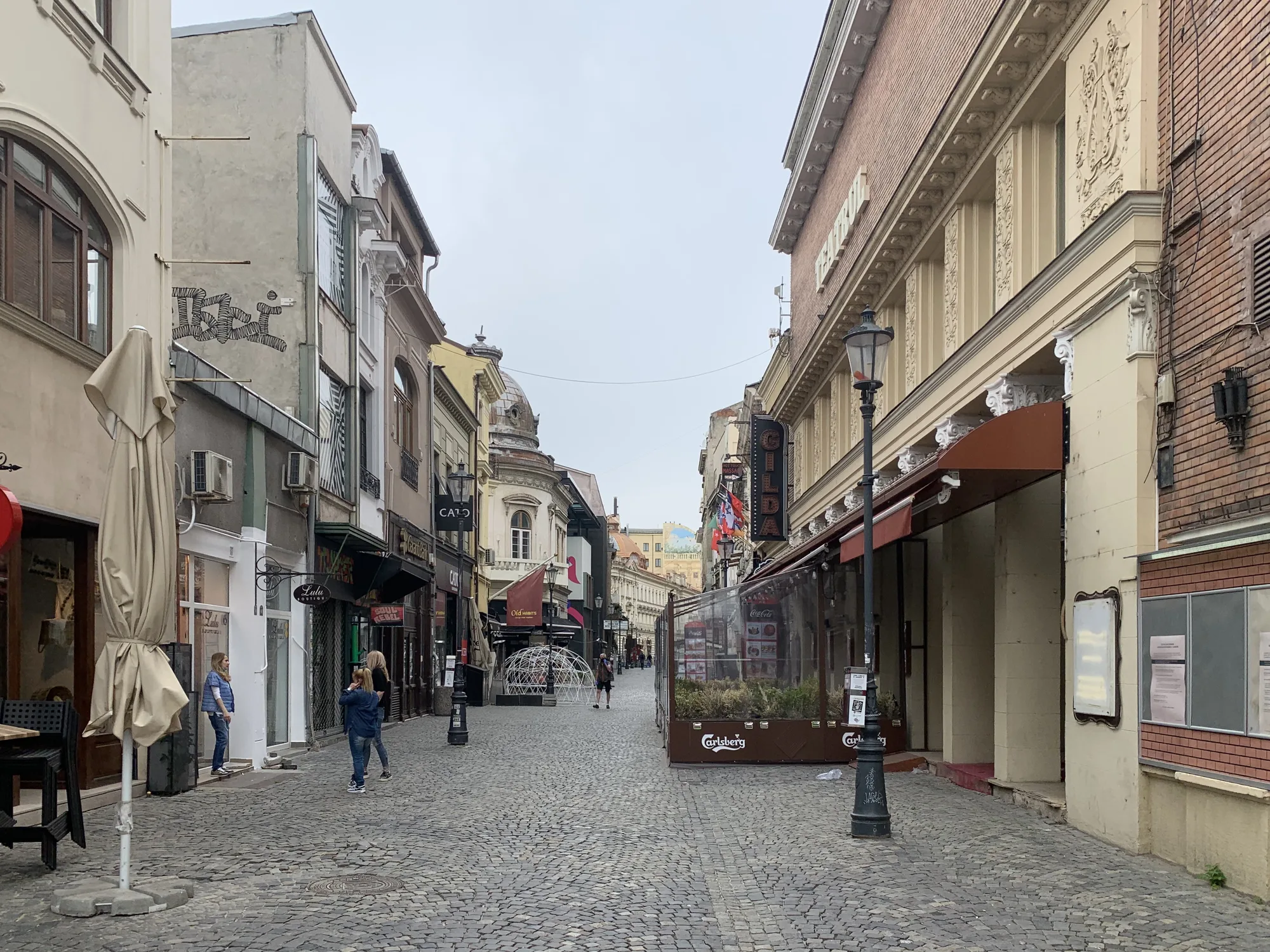
Historic Heart
Old Town Lipscani Guide
Explore Bucharest's vibrant historic center - cobblestone streets, baroque churches, and endless discoveries
Reviewed May 2026 · Love Bucharest editorial team
Photo: Neoclassicism Enthusiast · CC BY-SA 4.0 · Wikimedia Commons
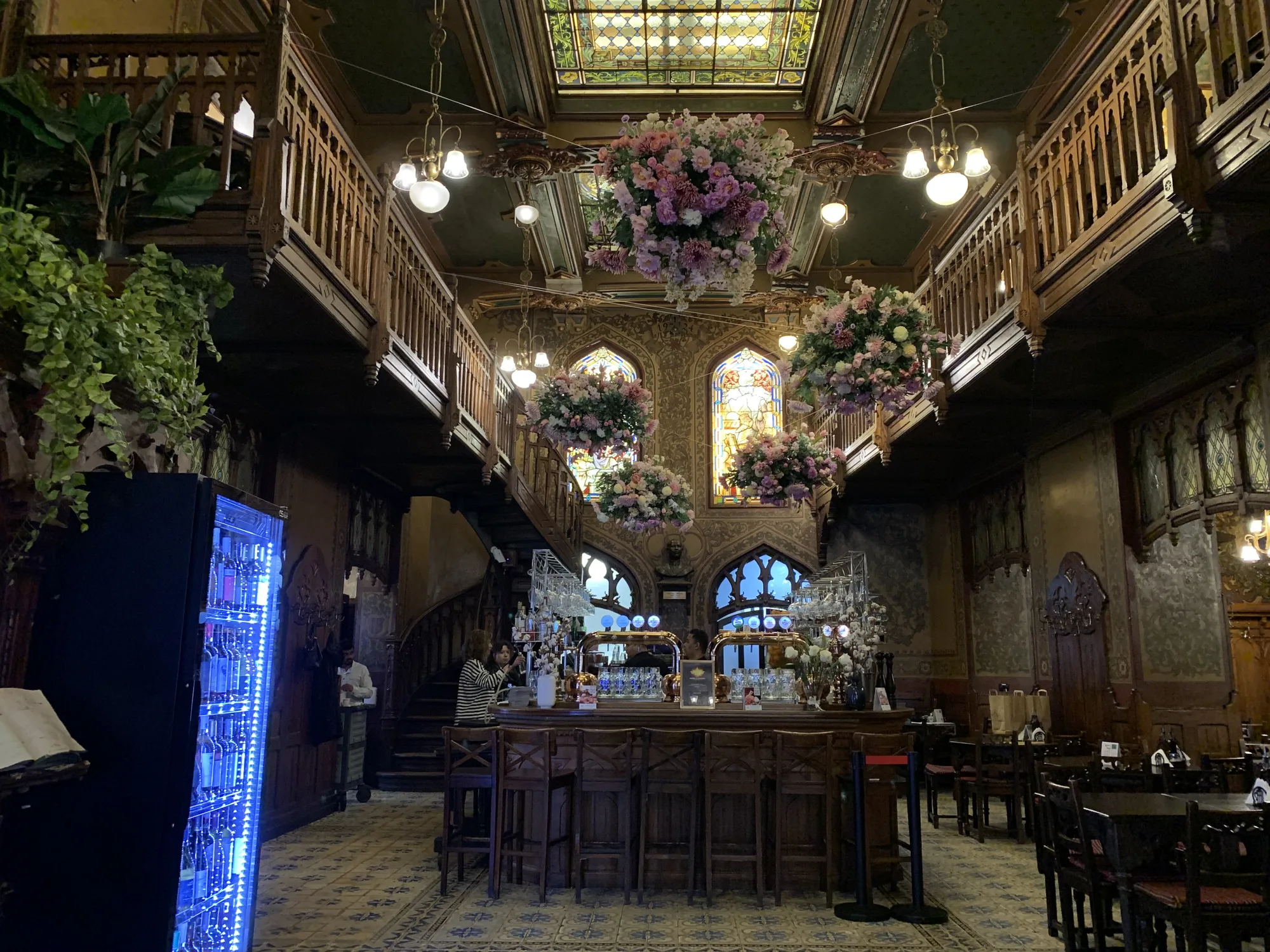
Bucharest's Old Town
Lipscani, Bucharest's Old Town, is where medieval history meets contemporary energy. This labyrinth of cobblestone streets, with roots in the 15th century, now buzzes with cafes, restaurants, bars, and cultural spaces, creating the city's most vibrant neighborhood.
This is the founding ground of the city. The Old Princely Court (Curtea Veche), tied to Vlad III the Impaler, sits at the heart of it, and the document that first names Bucharest dates to 1459. From that medieval seat the quarter grew into a merchants' district, packed with shops, inns and guilds — and you can still read that history in the street signs, which carry the names of the trades that once worked each lane.
What makes Lipscani special is the layering: an 18th-century monastery and a Brâncovenesc church a few steps from a belle-époque glass arcade, a galleried Ottoman-era inn around the corner from a famous bookshop set inside a restored bank. By day it is for slow wandering and detail-hunting; by night it is the city's busiest bar-and-terrace zone. This guide covers the must-see sights, the history behind the names, where to eat and drink without falling into a trap, and when to go.
A short history of Lipscani
Where the city began
The Old Town is Bucharest's founding ground. The Old Princely Court (Curtea Veche) is tied to Vlad III the Impaler, whose 1459 document is the first surviving written mention of the city, and the neighbouring Curtea Veche Church (c. 1559) is the oldest church on its original site in the centre. The district grew up around this princely seat.
A merchants' quarter
Lipscani Street, first recorded in the late 16th century as Ulița Mare ("the Great Street"), takes its name from the lipscani — merchants who brought goods from the Leipzig (Lipsca) fairs. The quarter boomed under Princes Șerban Cantacuzino and Constantin Brâncoveanu in the late 17th and early 18th centuries, filling with shops, inns (hanuri) and guilds.
Streets named for their guilds
Many lanes still carry the names of the trades that worked them: Blănari (furriers), Șelari (saddle-makers), Șepcari (cap-makers), and Gabroveni (after merchants from Gabrovo). Smârdan, once the "German Street," was renamed in 1878 for a battle of Romania's war of independence. Reading the street signs is a quick history lesson in itself.
Must-See Highlights
Stavropoleos Monastery
Church built in 1724 under Prince Nicholas Mavrocordat by the Greek monk Ioannikios — a jewel of the Brâncovenesc style with a colonnaded courtyard, frescoed interior, and Romania's largest collection of Byzantine-music books. The calmest spot in the Old Town.
Pasajul Macca-Vilacrosse
Fork-shaped, yellow-glass-roofed covered arcade designed by Felix Xenopol and opened in 1891 — one arm meets Calea Victoriei, the other heads to the National Bank. Bucharest's most romantic and photogenic passage.
Hanul lui Manuc
Galleried 1806–1808 inn (khan) built by the Armenian merchant Manuc Bei, where talks toward the 1812 Treaty of Bucharest were held. The city's oldest operating hotel building, wrapped around a cobbled courtyard.
Carturesti Carusel
Bookshop opened in 2015 inside the restored early-20th-century Chrissoveloni Palace (a former bank) at Lipscani 55. Six floors around a luminous white spiral atrium, with a top-floor bistro — one of the world's most beautiful bookstores.
Old Princely Court (Curtea Veche)
The fortified residence linked to Vlad III the Impaler and the site of the 1459 document that first names Bucharest. The city's oldest medieval monument, beside the c. 1559 Curtea Veche Church.
Pasajul Victoria
The colourful "umbrella street," where suspended umbrellas form a canopy over a narrow lane — among the most-photographed corners of the Old Town.
Areas to Explore
Lipscani Street
The main spine of the Old Town, largely pedestrian and packed with bars, restaurants and shops — the most vibrant strip day and night. Branching lanes (Smârdan, Gabroveni, Șelari) carry their old guild names and the densest cluster of terraces.
Covered Passages
Macca-Vilacrosse (the yellow-glass arcade, 1891) and the colourful umbrella-covered Pasajul Victoria are architectural set-pieces with cafés tucked beneath them — atmospheric shortcuts between the busy streets.
Side Streets & Courtyards
The best discoveries are off the main drag: the colonnaded Stavropoleos courtyard, the galleried inner yard of Hanul lui Manuc, the umbrella-canopied Pasajul Victoria, and hidden cafés, galleries and quiet corners reached only by ducking down a side alley. This is where the Old Town stops feeling like a bar strip and starts feeling like a historic city again, so it is worth slowing right down and following whatever lane looks most intriguing.
Dining & Nightlife
Traditional Romanian
Caru' cu Bere (the famous 1879 beer hall with its carved-wood, stained-glass, neo-Gothic interior) and Hanul lui Manuc's galleried courtyard are the heritage rooms. Order sarmale with mămăligă, mici, and papanași to finish; both book out, so reserve ahead, especially on weekends.
Cafés
Origo, Bucharest's pioneering third-wave coffee shop and roastery, sits right in the centre; the Bistro Carusel under the glass roof of Cărturești Carusel is a lovely break, and Beans & Dots is nearby. Specialty coffee runs roughly 12–18 lei.
Where to eat well (not trap)
The biggest pitfall is the picture-menu terraces crowding the busiest lanes. Step a street or two back, or use the dedicated Old Town restaurants guide for a curated shortlist. Mid-range mains run roughly 50–120 lei; tip around 10% in cash and pay in lei.
Nightlife
Hundreds of bars and clubs cluster along Lipscani and Smârdan streets — lively and cheap by Western standards (beer ~10–15 lei, cocktails ~25–40 lei). Steer clear of aggressive promoter-touted bars and "ladies drink free" traps, and check prices before you order.
When to Visit
Time of day
Early morning (roughly 7–9am) gives you empty cobbles, soft light and quiet passages for photos. By late afternoon the terraces fill, and after dark the bar streets take over — two very different Old Towns in one day.
Day of week
Friday and Saturday nights are the loudest and most crowded; midweek is calmer and better for a relaxed dinner. Sunday mornings are particularly peaceful for a wander before the day picks up.
Season
Spring and autumn are the sweet spot for walking the lanes in comfort. Summer brings packed terraces and warm evenings (start early to beat the heat); around the winter holidays the nearby Christmas-market lights add their own atmosphere.
Insider Tips
Frequently asked questions
What is Lipscani / the Old Town?
Lipscani (Centrul Vechi) is Bucharest's historic core — a compact maze of cobbled streets around the city's founding site. It is named for the lipscani merchants who traded goods from the Leipzig fairs, and today it is the city's densest concentration of historic buildings, restaurants, cafés and nightlife.
Why is it called Lipscani?
The name comes from the lipscani — merchants who brought goods from the Leipzig (Lipsca, in Romanian) fairs to Bucharest. The street was first recorded in the late 16th century as Ulița Mare ("the Great Street"). Many side lanes still carry their old guild names, such as Blănari (furriers) and Șelari (saddle-makers).
What are the must-see sights in the Old Town?
The essentials are the Old Princely Court (Curtea Veche, the 1459 founding site), the 1724 Stavropoleos Monastery, the galleried courtyard of Hanul lui Manuc, the yellow-glass Macca-Vilacrosse passage, and the Cărturești Carusel bookshop. Most can be linked in a single short walking loop.
Where should I eat in the Old Town?
Caru' cu Bere and Hanul lui Manuc are the famous traditional rooms (book ahead). For better value, step a street or two off the busiest lanes and avoid the picture-menu terraces. Cafés like Origo and the Bistro Carusel are excellent for a break — see the Old Town restaurants guide for a curated shortlist.
When is the best time to visit Lipscani?
Early morning (around 7–9am) is best for photos and quiet passages; evenings are when the bars and terraces come alive. It is busiest on Friday and Saturday nights. The covered Macca-Vilacrosse passage looks loveliest in soft mid-morning light.
Is the Old Town safe?
Yes — it is the most touristed, busiest part of the city and broadly safe day and night. Use normal city-centre sense: watch your belongings in packed crowds, avoid the aggressive promoter-touted bars, check prices before ordering, and use a ride-hailing app late at night rather than a street taxi.
Is it worth staying in the Old Town?
It is the most convenient base — you can walk to almost everything central — but the bar streets are noisy on weekend nights. If sleep matters, choose a room just off the loudest lanes (or on a courtyard) and walk in for the fun.
Explore More
Old Town Walking TourA self-guided route through the cobbled lanes of Lipscani, sight by sight.
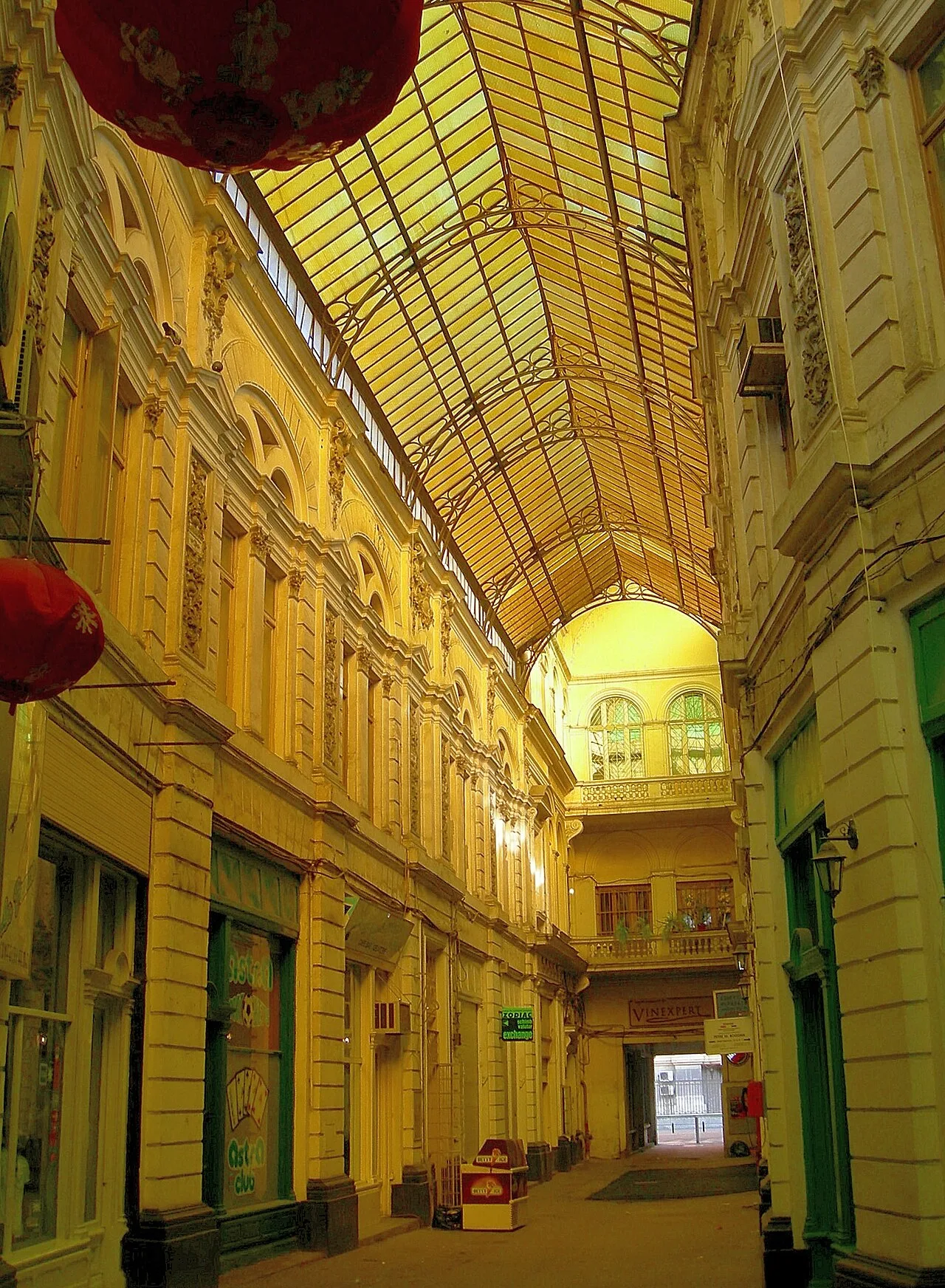 Macca-Vilăcrosse Passage
The yellow-arched glass arcade tucked just off the Old Town.
Walking RoutesMore on-foot routes across the city centre.
Old Town RestaurantsWhere to eat well around Lipscani.
Nightlife GuideThe Old Town after dark — bars and late terraces.