Tour Tickets & Planning
Palace of Parliament
How to book, what to bring, and how to make the visit feel smooth — not stressful.
Reviewed June 2026 · Love Bucharest editorial team
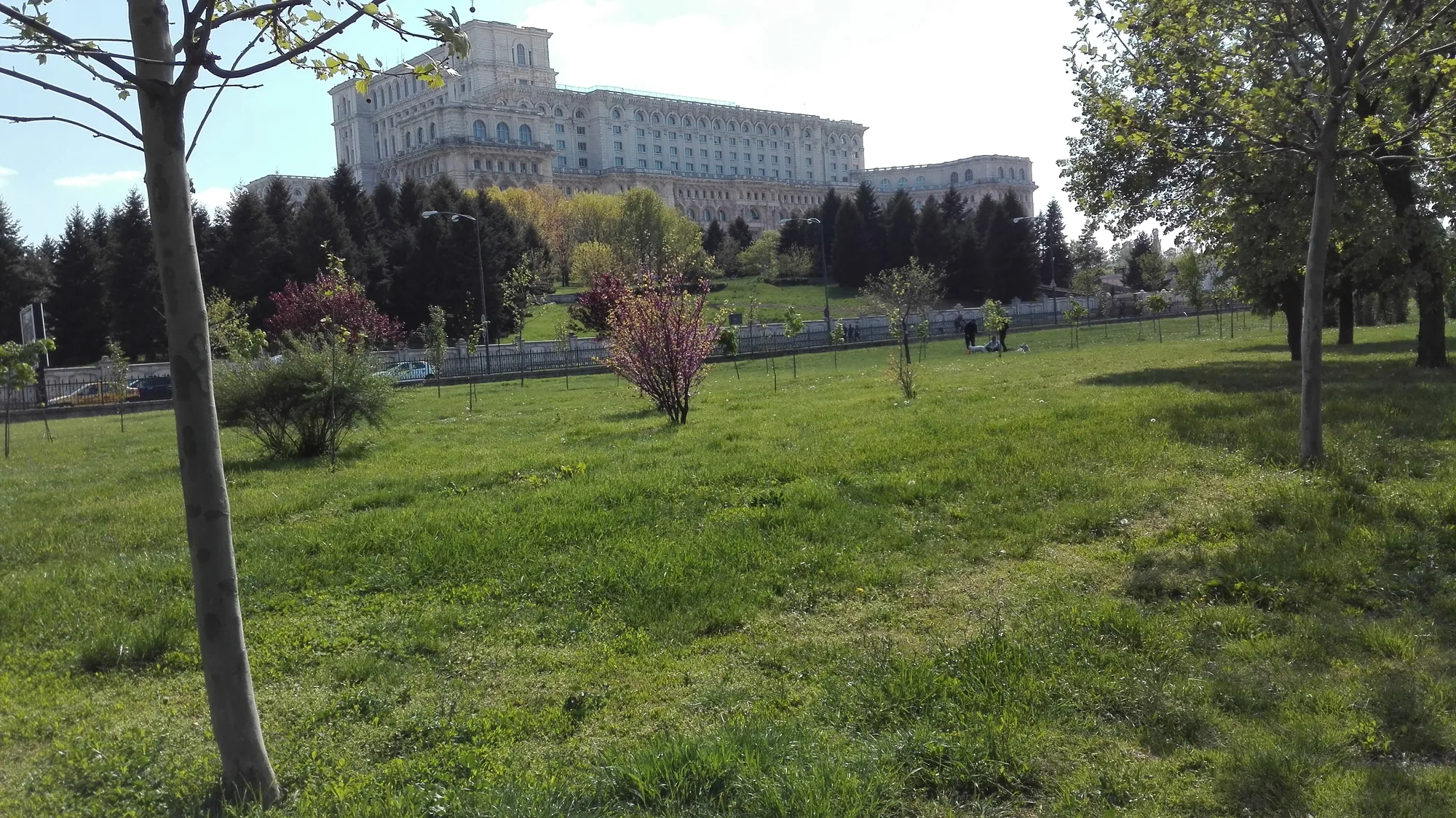
Photo: Nicolae Sfetcu · CC BY-SA 4.0 · Wikimedia Commons
Bucharest’s most iconic tour — done the easy way
The Palace of Parliament (often called the People’s House, or Casa Poporului) is all about scale: long corridors, enormous halls, and a story that explains a lot about modern Romania. One of the largest administrative buildings in the world, it is the single most-visited monument in the city — and a little planning turns it from a logistics puzzle into a clear highlight of any trip.
The story behind the building
Knowing how — and why — the Palace was built makes the tour land far harder. Here is the short version of one of the most extraordinary construction stories in modern Europe.
A megastructure born of the Ceaușescu era
Construction of what was then called the Casa Poporului (“House of the People”) began in 1984 under the communist leader Nicolae Ceaușescu, as the centrepiece of a vast, brutal redevelopment of central Bucharest. An entire historic district — churches, monasteries and thousands of homes on Dealul Spirii (Spirea’s Hill) — was demolished to clear the site, and tens of thousands of workers, soldiers and volunteers laboured on it in shifts. The building was still unfinished when the 1989 Revolution ended the regime, and Ceaușescu never saw it completed.
A record-setting scale
The Palace is one of the largest administrative buildings on the planet — frequently cited as the second-largest after the Pentagon — and among the heaviest buildings in the world. It rises 12 storeys above ground (with extensive levels and bunkers below), and its hundreds of rooms are clad in Romanian marble, with vast crystal chandeliers, oak and walnut panelling, and metres of woven carpet. Almost everything you see was sourced and made in Romania, a deliberate point of national pride built into the design.
From “House of the People” to Palace of the Parliament
After 1989 the building was renamed the Palace of the Parliament. Today it houses the Chamber of Deputies and the Senate, hosts conferences and state events, and contains the National Museum of Contemporary Art (MNAC, entered from the Izvor side at the rear). For visitors, the guided tour is the way in — a chance to walk corridors and ballrooms built at a scale that is hard to grasp from the outside.
Quick facts (what to know before booking)
What it is
One of the world’s largest administrative buildings and Bucharest’s most iconic monument.
How you visit
Guided tour only (routes vary by availability and schedule).
What you must bring
Government-issued photo ID (passport/ID card). Entry is security-controlled.
How far ahead to book
Earlier is better, especially weekends and peak season.
How to book (step-by-step)
Choose the right tour route
There are typically multiple tour options (different floors/rooms and sometimes terrace routes). The “best” one depends on time, mobility, and whether interiors or views matter more.
Reserve in advance
Tours run on schedules and group sizes are limited. Booking ahead is the difference between “walk in and hope” and a smooth plan.
Double-check the entrance and arrival time
The Palace is huge and the meeting points can change. Aim to arrive early to handle security and check-in without stress.
Bring ID and keep bags simple
ID is typically required for entry. Large bags can slow down screening, and some items may not be allowed.
Plan the rest of the day around it
Treat the tour as the day’s anchor. Combine it with one nearby walk and one relaxed meal — not a full city sprint.
Note: Ticket prices, tour routes, and schedules can change. For the latest availability and official booking channels, verify details directly with the Palace’s visitor information/booking desk before finalizing plans.
What to expect on the day
Security and check-in
- ✦Expect airport-style screening and a controlled entry process.
- ✦Arrive early to avoid losing your slot due to delays.
- ✦Have ID ready; keep the booking confirmation accessible.
Tour pace and walking
- ✦The building is monumental — hallways are long and rooms are large.
- ✦Comfortable shoes matter more than most visitors expect.
- ✦Some routes involve stairs; elevator access varies by route and day.
Photography rules
- ✦Rules can vary by route and day. Sometimes photography is allowed with restrictions or an extra fee.
- ✦Assume flash is not welcomed and follow the guide’s instructions.
- ✦If photography is important, confirm the rules before the tour starts.
Timing
- ✦Tours can be around 45–90 minutes depending on route and group flow.
- ✦Add buffer time for security and the walk to/from the meeting point.
Pair it with something nearby (best use of your time)
Unirii Square fountains (seasonal)
A wide-boulevard Bucharest moment — best in the evening when lights and movement feel dramatic.
Things to Do →Old Town (Lipscani)
Classic post-tour plan: passages, bookstores, and an easy dinner in the historic center.
Old Town Guide →Cişmigiu Gardens
If the Palace feels intense, balance the day with a calm loop in Bucharest’s most romantic central park.
Parks & Gardens →FAQs
How much does a ticket cost?
The standard guided tour is around 60 lei for adults, with reduced rates for students (roughly 30 lei) and children 7–18 (roughly 20 lei); children under 7 are usually free. Extended routes (underground levels, the terrace) cost more, and a photography permit is a separate fee. Prices change, so confirm on the official visit page before you go.
Can tickets be bought on the spot?
Sometimes same-day availability exists, but it is not reliable, and walk-up spots can sell out. For a short trip or a weekend, book ahead through the official visitor site (cic.cdep.ro) to lock in a slot.
Is ID really required?
Yes. The Palace is an active seat of government, so entry is security-controlled and a government-issued photo ID (passport or national ID card) is checked at the door. Bring the physical document, not just a photo of it.
Can I visit without a guided tour?
No — the building is only open to the public on a guided tour. Tours run on a schedule in several languages (Romanian and English, plus others by availability), so check the timetable and pick a language slot when you book.
How long does the tour take?
The standard tour runs roughly 45–90 minutes depending on the route and group flow. Allow 2–3 hours in total once you add the arrival buffer, security screening and the walk to and from the meeting point.
Can I take photos inside?
Photography is often allowed with restrictions, sometimes for an extra permit fee, but rules vary by route and day. Flash is generally discouraged. If photos matter, confirm the current rule and pay any permit before the tour starts.
Is the tour worth it?
For most first-time visitors, yes — it is a “scale” experience that is hard to replicate elsewhere in the city, and the history it carries explains a great deal about modern Romania. If you only do one ticketed sight in Bucharest, this is the contender.
Is it accessible for limited mobility?
The building is monumental, with long corridors and some stairs; elevator access varies by route and day. If mobility is a concern, contact the visitor desk in advance to ask which route and timing suit you best.