Bucharest
Neighborhoods
Pick the right area to stay — and plan better days in the city.
Reviewed April 2026 · Love Bucharest editorial team
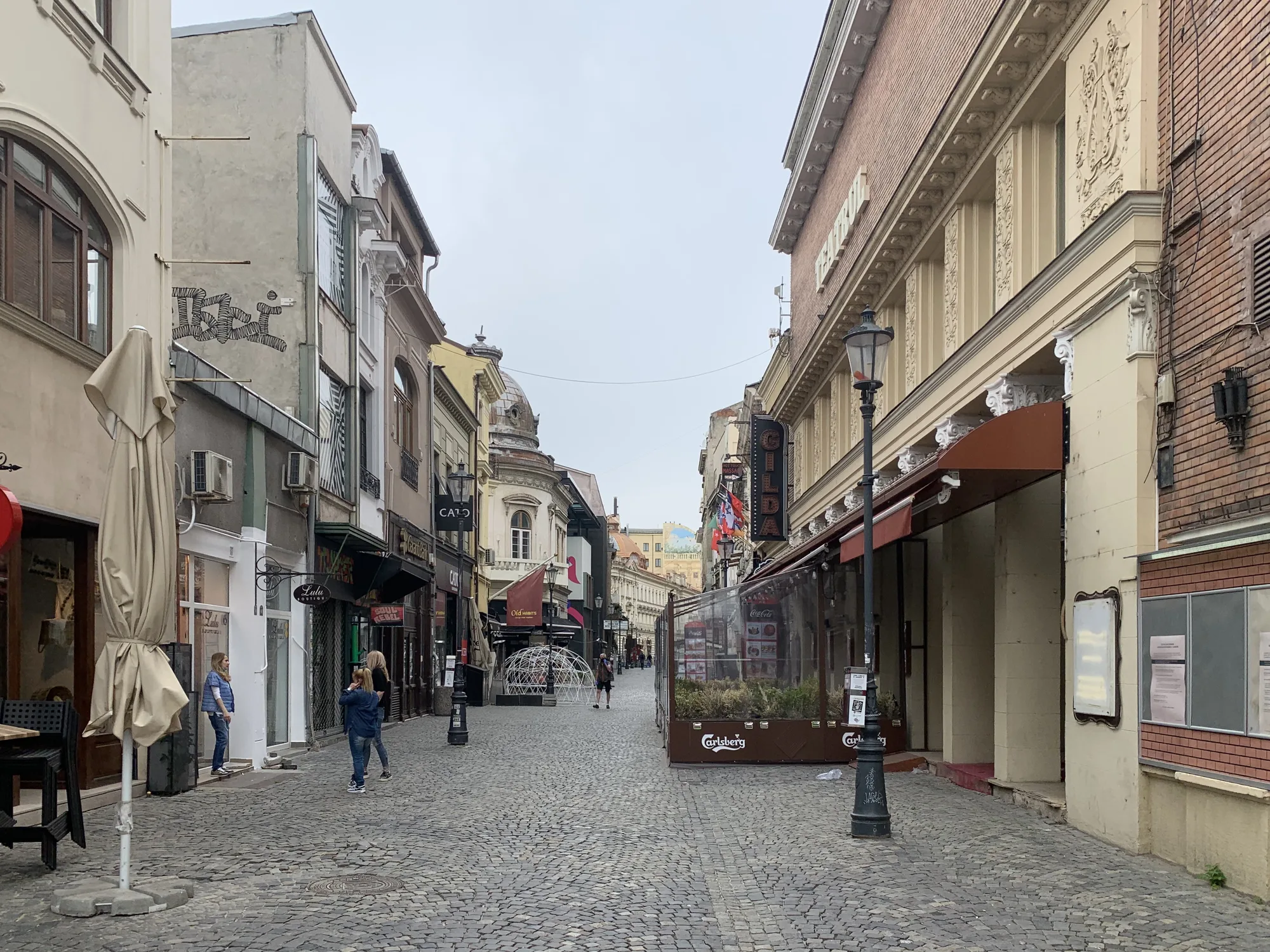
Photo: Neoclassicism Enthusiast · CC BY-SA 4.0 · Wikimedia Commons
Bucharest is spread out enough that your base changes how the trip feels — mostly in terms of evening flow and how often you backtrack. Pick a neighborhood that matches your pace (walk-heavy vs. transit-heavy) and your ideal night plan (quiet vs. lively).
- • First-timers: stay central and keep daytime routes simple.
- • Couples: prioritize walkable evenings and a relaxed return home.
- • Short trips: walkability beats “one nicer hotel feature.”
- • Longer stays: choose vibe, then repeat your favorite spots.
Where to stay
A practical breakdown of the best areas for first-timers and repeat visitors.
Old Town walk
A classic route through Lipscani — useful for choosing your base and pacing your day.
A simple base-choice method
If you’re torn between areas, decide based on what you’ll do most evenings. In Bucharest, the “best” base is the one that makes your nights easy — dinner, a calm walk, and a short ride home.
- Pick one signature evening plan (bars, restaurants, or a low-key walk).
- Choose a base that keeps that plan simple for 2–3 nights in a row.
- Build day routes by cluster so you don’t criss-cross the city.
How Bucharest's areas differ
Bucharest is a large, low-rise capital, and its character changes noticeably from one district to the next — from the cobbled, bar-lined Old Town to leafy residential villas and lakeside parks. Choosing a base is really about deciding what you want your mornings and evenings to feel like, and how often you are willing to use the metro. The historic centre is compact and walkable; the smarter residential districts to the north are quieter and greener but a short hop out. The quick orientation below covers the areas most visitors weigh up.
Old Town / Lipscani (Centrul Vechi)
The compact, cobbled historic core: pedestrian lanes named for the guilds that once worked them, Stavropoleos Monastery, Manuc's Inn, and a dense run of bars, terraces, and bistros. Lively and central, touristy and loud at night — ideal if you want everything on your doorstep, less so if you need quiet sleep.
Calea Victoriei
Bucharest's belle-époque showcase boulevard, lined with palaces, the Athenaeum, the National Museum of Art, and Revolution Square; pedestrianised on summer weekends. Elegant and walkable, with a more grown-up cocktail-and-wine-bar scene than the Old Town just east of it.
Universitate & Cișmigiu
The geographic middle of the city, around University Square and the leafy Cișmigiu Gardens (Bucharest's oldest park, 1847). Well connected, walkable to almost everything central, and a calmer base than the Old Town while staying genuinely central.
Dorobanți & Floreasca
Smart residential districts north of the centre, known for design-led restaurants, cocktail bars, and a more local, upscale evening scene. Greener and quieter than downtown, with easy metro and rideshare access — good for travellers who want polish over party.
Cotroceni
A graceful, villa-lined neighborhood west of the centre, home to Cotroceni Palace and the university botanical garden. Low-key and architecturally pretty — a residential, slow-paced base for repeat visitors who already know the centre.
Herăstrău (north)
The area around King Mihai I (Herăstrău) Park, Bucharest's largest, with its lake, the open-air Village Museum, and waterfront cafés. Spacious and green, a little removed from the historic sights but well linked by the M2 metro line.
Unirii
The grand, monumental axis running from Piața Unirii up to the Palace of the Parliament and Piața Constituției, with the seasonal fountains show and the main Christmas market. A major transit hub on the metro, and walkable to the Old Town just to the north.
Getting between them
The central districts — Old Town, Calea Victoriei, Universitate, Unirii, and Cișmigiu — sit close enough that walking is usually the most pleasant way to move between them, and it is how you will spend most of a city day. For the longer hops to Dorobanți, Floreasca, Cotroceni, or Herăstrău in the north, the metro is fast and cheap: the M2 line runs north-south through the spine of the city and links many of the areas travellers care about, with trams and buses covering the cross-town gaps.
Two practical notes. The metro (Metrorex) and the surface network (STB buses, trams, trolleybuses) are separate ticketing systems, so a surface ticket does not work on the metro. And the metro runs only until around 23:00, so plan late nights around a rideshare app or night buses — rideshare is cheap and the easiest way home after the Old Town winds down.
Neighborhoods FAQ
Which neighborhood should I stay in for a first visit?
Stay central. The Old Town puts you in the middle of the action but can be noisy at night; the area around Universitate and Cișmigiu, or along Calea Victoriei, gives you the same walkability with calmer evenings. For a first trip, prioritise being able to walk to the historic core and the central museums over a fancier hotel feature further out.
How do I get between neighborhoods?
The compact centre — Old Town, Calea Victoriei, Universitate, Unirii, Cișmigiu — is genuinely walkable, and walking is often the nicest way to move between them. For longer hops to Dorobanți, Floreasca, Cotroceni, or Herăstrău, the metro is fast and cheap (the M2 north-south line links many of them), with surface trams and buses filling the gaps and rideshare apps an easy late-night option once the metro stops around 23:00.
Is the metro a single ticketing system with the buses?
No — the metro (Metrorex) and the surface network of buses, trams and trolleybuses (STB) are separate systems with separate tickets. A surface ticket does not cover the metro and vice versa. For most central sightseeing you will walk; load a metro card or use a contactless bank card for the longer north-south hops.
Should I switch neighborhoods mid-trip?
If you are staying four or more nights, switching base part-way through is an easy way to make the city feel bigger without adding travel time — for example, a couple of central nights in or near the Old Town, then a few quieter nights in Dorobanți or near Herăstrău. For shorter trips it is simpler to pick one central base and build day routes by cluster.
Where is the nightlife, and where is it quiet?
The densest, most touristy nightlife is in the Old Town. For a more design-led, local scene — cocktail bars, wine bars, and summer gardens — head to Calea Victoriei, around Piața Romană, and out toward Dorobanți and Floreasca. If you want quiet evenings, Cotroceni and the residential streets near Herăstrău are calm while still being well connected.