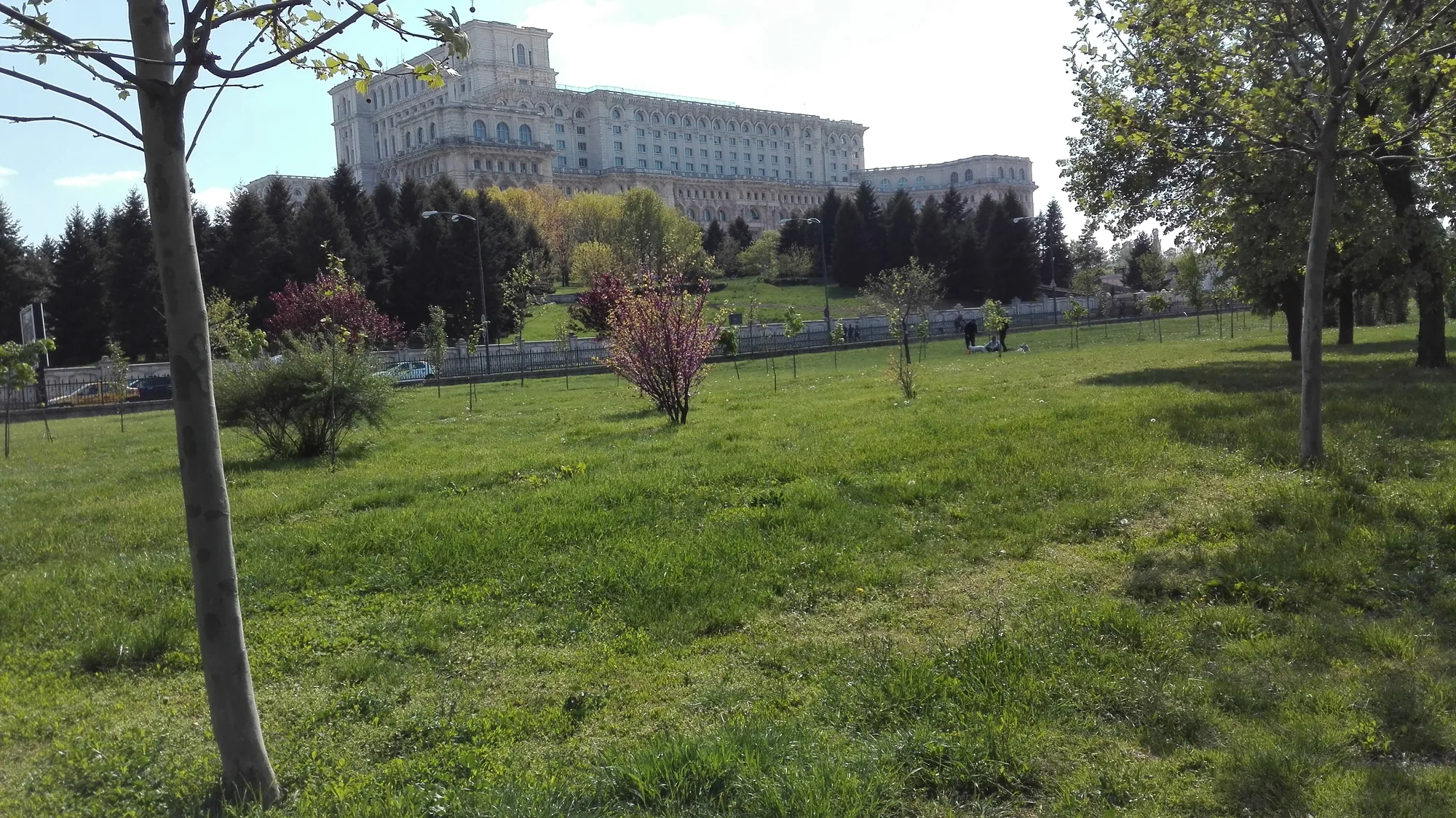
Old Town (Lipscani)
Busy, touristy, nightlife-heavy
At night: Safe when crowded, but watch for pickpockets and expect noise. Best for bar-hopping; less ideal for light sleepers.
Best for: Nightlife weekends and short stays
Old Town stay tips →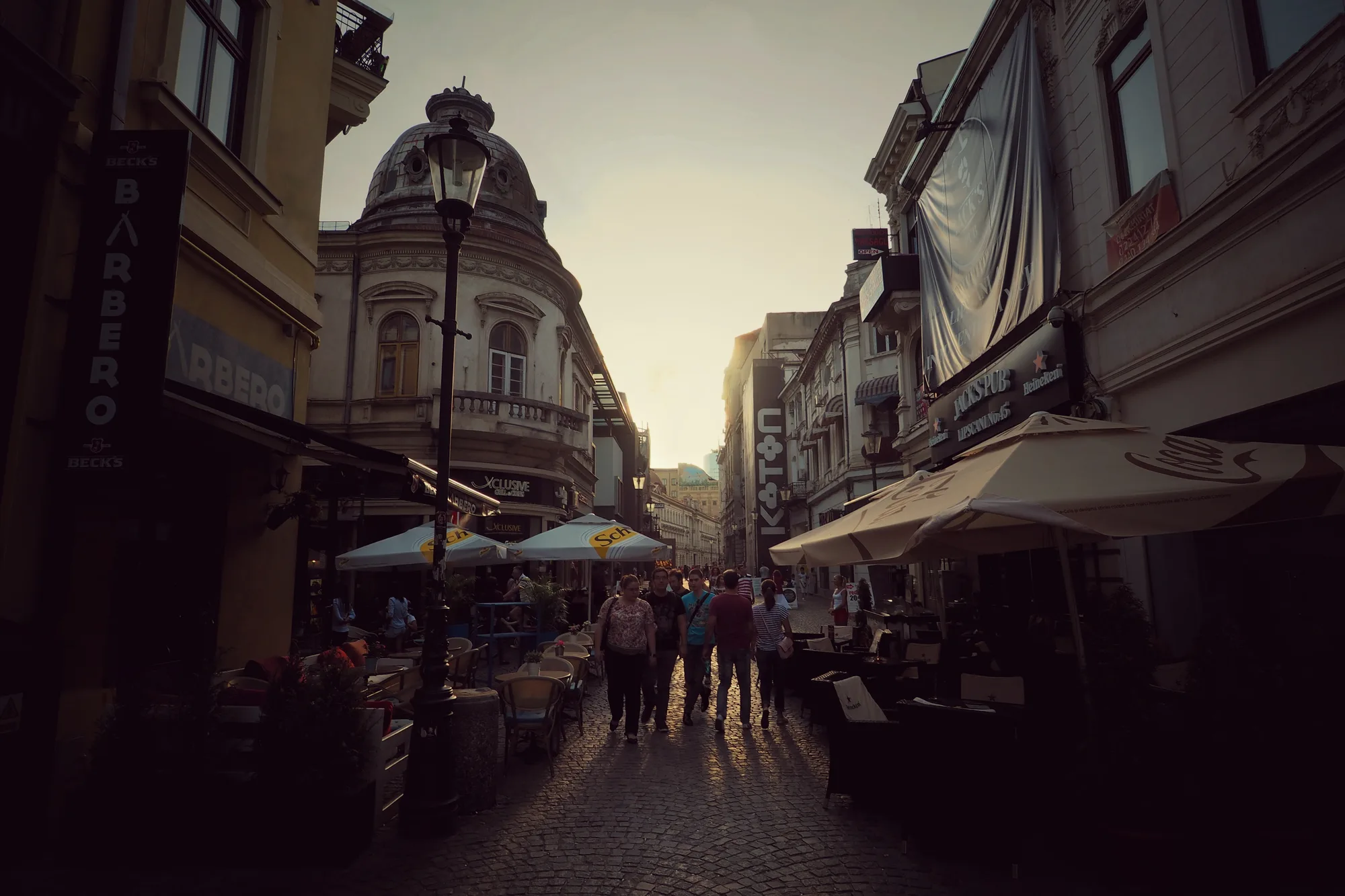
Tourist Safety Guide
Practical, calm advice to enjoy evenings in Bucharest with confidence — without overthinking every street.
Reviewed May 2026 · Love Bucharest editorial team
Photo: Ștefan Jurcă · CC BY 2.0 · Wikimedia Commons

Bucharest evenings can be brilliant: lively streets, great dining, and a nightlife scene that ranges from cozy bars to all-night clubs. Safety is usually about simple choices—well-lit routes, smart transport after midnight, and avoiding the small set of predictable scams.
Bucharest is, on balance, a safe European capital, and most visitors spend their evenings here without incident. Violent crime against tourists is rare; the realistic risks are the petty ones common to any big city — pickpocketing in crowds and on packed public transport, the occasional overcharging attempt, and a small set of predictable scams. The central districts and the Old Town are busy and well-populated late into the night, which in itself is a form of safety. With normal big-city awareness, walking in the centre after dark is fine.
The smartest single upgrade is your base. Choosing accommodation on the edges of the Old Town or near the well-lit main boulevards and a metro stop means your routes home are bright and busy rather than quiet and confusing. The Old Town core is the liveliest but also the noisiest and the most pickpocket-prone; areas like Calea Victoriei, Revolution Square, Dorobanți and Floreasca are more relaxed while still central. Keep valuables zipped away or in a front-worn crossbody bag, especially when moving through dense nightlife crowds.
Transport is the other thing worth planning. The metro runs until roughly 23:00, so for after-midnight nights the easy, cheap answer is a ride-hailing app — Bolt and Uber are both widely used — or an app-ordered taxi, rather than flagging a car on the street or accepting an unsolicited offer at a transport hub. Pay in Romanian lei and decline dynamic currency conversion at terminals and ATMs. And keep the country's emergency number, 112, to hand; it covers police, ambulance and fire across the EU and operators usually speak English.
Bucharest is generally safe for tourists at night, especially in central areas with normal big-city awareness.
Petty theft in crowded places, overcharging attempts, and late-night noise in party areas.
Ride-share (Uber/Bolt) or an official taxi process. Public transport is great earlier; late-night depends on route.
Choose accommodation on the edges of Old Town or near major boulevards/metro stops for well-lit routes home.
In the center, major streets are active and well-lit. Use them as your “backbone” for walking at night.
Late at night, a short ride is often worth it—especially if the walk home crosses quiet streets or construction zones.
Phones and wallets disappear fastest in crowds. Keep them in zipped pockets or a crossbody bag worn in front.
The difference between a great walk and an awkward one is often a single turn. Pick a simple route before stepping out.
Old Town has pedestrian streets. Set a nearby main-street meeting point for pick-ups to avoid wandering with luggage or late-night confusion.
If a street feels empty or uncomfortable, change course. Bucharest offers multiple parallel routes back to the center.
Busy, touristy, nightlife-heavy
At night: Safe when crowded, but watch for pickpockets and expect noise. Best for bar-hopping; less ideal for light sleepers.
Best for: Nightlife weekends and short stays
Old Town stay tips →Elegant, central, well-lit
At night: Great for evening walks, museums, and “date-night” vibes. Quieter than Old Town while still close.
Best for: First-timers and couples
Best areas guide →Upscale, local nightlife
At night: More lounge-and-dinner style than party streets. Great for a refined night out; taxis/ride-shares are common.
Best for: Foodies and stylish evenings
Nightlife areas to stay →Residential, calm
At night: A quieter base that feels local. Nights are calmer; rely on metro/ride-share for late returns.
Best for: Quiet stays and slower travel
Neighborhoods overview →At transport hubs, ignore unsolicited drivers offering rides. Use ride-share apps or official taxi ordering/queues.
In Old Town, some places optimize for foot traffic, not quality. Step one street away and the vibe often improves.
Avoid accepting dynamic currency conversion (paying in your home currency). Choose to pay/withdraw in RON when prompted.
Crowded nightlife streets are prime for pickpockets. Keep your phone away when moving through dense crowds.
Broadly yes. Bucharest is a generally safe European capital, and the central and Old Town areas are busy and fine to walk at night with normal big-city awareness. The realistic risks are petty — pickpocketing in crowds and the occasional overcharging attempt — rather than violent crime.
Pickpocketing on packed public transport and in crowded nightlife streets, unlicensed taxi drivers who overcharge, "tourist menu" restaurants in the busiest lanes, and dynamic-currency-conversion at card terminals. All are avoidable with a few simple habits.
The metro runs until roughly 23:00, so for after-midnight trips use a ride-hailing app (Bolt or Uber are widely used and cheap) or an app-ordered taxi. Avoid drivers who approach you at the airport or transport hubs, and make sure the meter or app price is set before you go.
The edges of the Old Town and the streets around Calea Victoriei and Revolution Square are central and well-lit, good for first-timers and couples. Dorobanți and Floreasca are upscale and more lounge-than-party. The Old Town core is the liveliest but also the noisiest and most pickpocket-prone.
Many solo travellers, including women, find Bucharest comfortable at night, particularly in the busy central areas. The usual precautions apply: stick to well-lit, populated routes, prefer ride-hailing for late returns, keep an eye on your drink, and step into a busy venue if anyone is pushy.
Dial 112 for police, ambulance or fire — it is the single EU-wide emergency number and operators typically speak English. Keep your accommodation address written down or saved offline in case you lose your phone.
Order cars through Bolt, Uber or the airport's official taxi terminals rather than accepting unsolicited offers, and always choose to pay or withdraw in Romanian lei (RON), declining "pay in your home currency" prompts at terminals and ATMs.
Emergency number
112 (Romania/EU emergency services)
If you lose your phone
Ask a hotel/restaurant to call a ride-share or taxi; keep your accommodation address written down.
If something feels wrong
Move to a brighter, busier area (main boulevard, hotel lobby, 24/7 shop) and reassess.
Safety feels easiest when the base is right and the transport plan is simple.