Behind Bucharest's grand architecture and bustling streets lies a genuinely romantic city — one with its own customs of love, a francophile "Little Paris" history, and a handful of places where Bucharesters have met, courted and married for generations. Rather than invent named couples, this guide tells the real stories of those places and the living traditions, so you can find your own moment among them.
Bucharest wears its romance honestly. The city earned its "Little Paris" nickname in the late-19th-century Belle Époque, when its French-educated elite remodelled it on Paris — grand boulevards, formal façades, French manners — and that francophile self-image still lingers on Calea Victoriei and beneath the dome of the Romanian Athenaeum. Romania also keeps two distinctly local customs of love: Dragobete, the folk day of lovers on 24 February, and the spring token of mărțișor on 1 March.
The places below are not fairy tales — they are real, and you can visit every one. Each carries the kind of romance that comes from being loved by a city for generations: the willow-shaded lake of Cișmigiu, the golden glass of Pasajul Macca-Vilacrosse, the painted concert hall a city built by public subscription, and the quiet courtyard of an 18th-century monastery. We tell their true stories and the customs around them, and leave the named couples to you.
Since 1847 • Cișmigiu Gardens
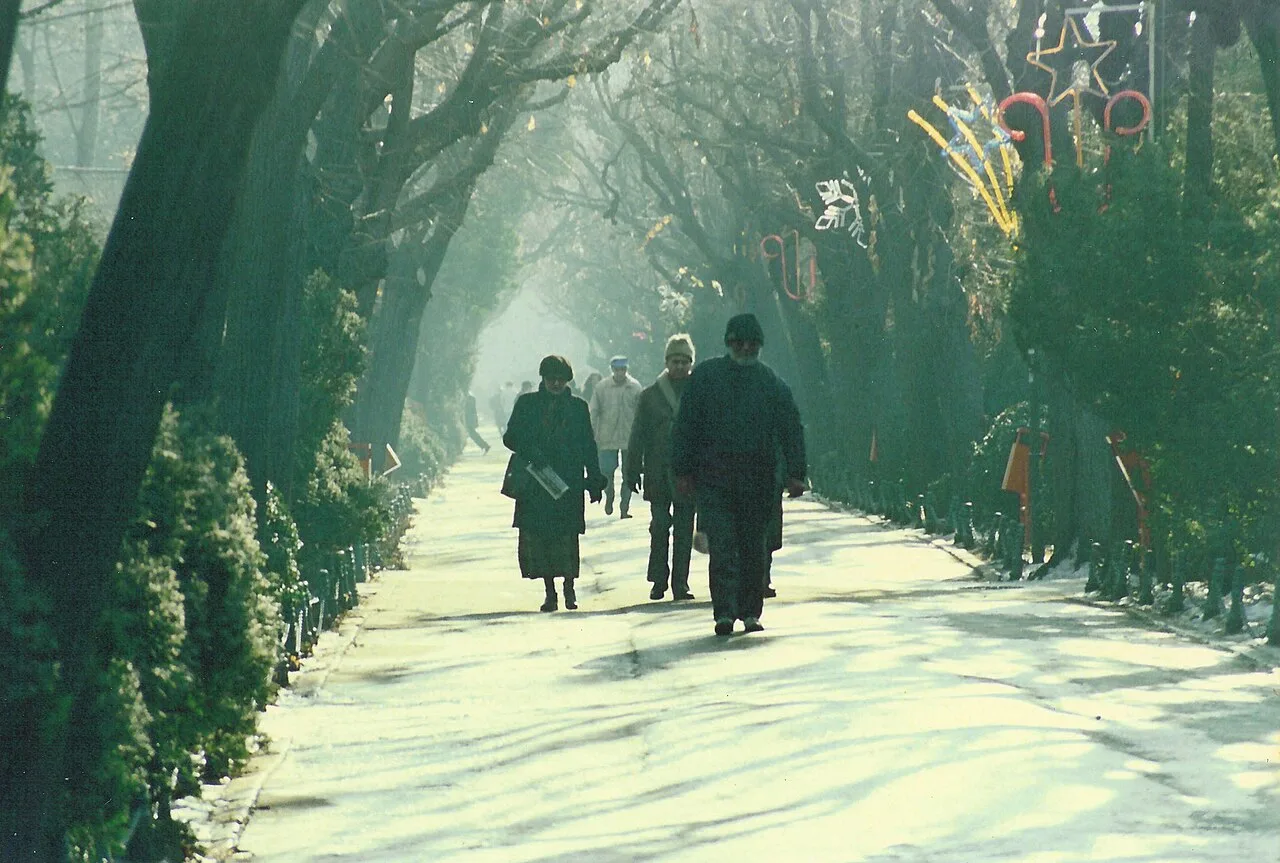
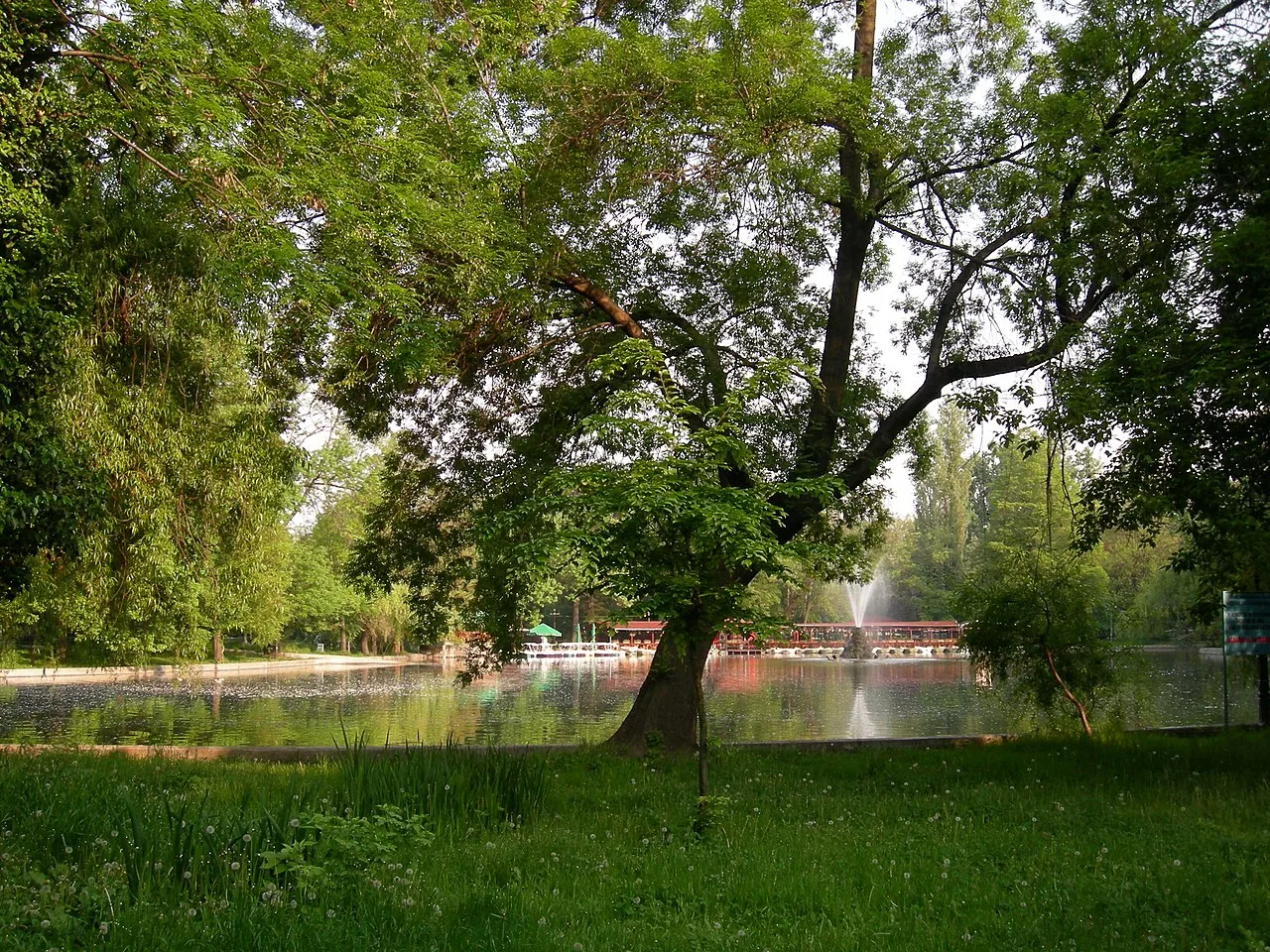
Cișmigiu, inaugurated in 1847 and laid out by the German landscape architect Carl Meyer, is Bucharest's oldest central park — an English-romantic garden of weeping willows, a boating lake and Victorian-style lampposts. For generations it has been the city's great meeting place: a Sunday stroll, a rowboat on the lake, a bench under the willows. It has appeared in Romanian novels and memoirs as the backdrop to first walks and quiet courtships, and in winter the lake becomes an ice rink. No single famous couple defines it — its romance is the everyday kind, repeated by Bucharesters for nearly two centuries.
Why couples love it today
Rowboats in summer, the ice rink in winter and the willow-shaded benches still make it the most beloved spot for couples in the city.
Opened 1891 • Pasajul Macca-Vilacrosse
This forked, glass-roofed arcade — designed by architect Felix Xenopol and opened in 1891 — was built to bring a Western, Parisian-style covered passage to Bucharest. Its unusual two-branch shape was forced by the Pesht Hotel in the middle of the plot, whose owner refused to sell. The yellow glass casts a warm amber light over the café tables below, and the arcade once housed the city's first stock exchange. That golden, sheltered atmosphere is exactly why it has become one of the most romantic corners in the city today.
Why couples love it today
The amber light and café terraces make it a favourite for couples and one of the most-photographed (and proposed-in) spots in Bucharest.
Inaugurated 1888 • Romanian Athenaeum
The Athenaeum (Ateneul Român), inaugurated in 1888 to a design by the French architect Albert Galleron, is the home of the George Enescu Philharmonic and the most beautiful concert hall in the country. Part of its construction was paid for by ordinary citizens through a public subscription, remembered by the campaign slogan "Dați un leu pentru Ateneu" — "Give a leu for the Athenaeum." There is something quietly moving in that: a city that loved music enough to build its temple together. A philharmonic evening here remains one of the most romantic dates in Bucharest.
Why couples love it today
Couples still dress up for concerts under the painted dome, and the floodlit façade at night is a classic romantic backdrop.
Founded 1724 • Stavropoleos Monastery
Stavropoleos is a small, exquisitely carved church in the Brâncovenesc style, founded in 1724 and tucked into a quiet corner of the busy Old Town. Its colonnaded courtyard is a pocket of calm a few steps from the loudest lanes, and its choir is known for reviving traditional Byzantine and Romanian sacred music. For couples it offers something rarer than a photo op — a moment of quiet and beauty together. It is an active monastery, so visit with respect: dress modestly and keep the peace.
Why couples love it today
The tranquil courtyard and carved stonework draw couples seeking a calm, meaningful pause, and it is a much-loved spot for wedding portraits.
Since 1879 • Caru' cu Bere
Caru' cu Bere has been serving Bucharest since 1879, its extraordinary neo-Gothic dining room — carved wood, stained glass, painted vaults — surviving war, communism and the changing city around it. Generations of Bucharesters have marked engagements, anniversaries and reunions beneath those vaults, often to live music and folk dancing. It is touristy now, but the sense of occasion is real: a meal here is a meal inside the city's memory.
Why couples love it today
Live music, folk-dance evenings and the historic room still make it a favourite for couples marking something special.
Opened 2015 • Cărturești Carusel
When Cărturești Carusel opened in 2015 inside a beautifully restored 19th-century Chrissoveloni bank on Strada Lipscani, it instantly became one of the city's favourite places to linger — six luminous levels of books wrapped around a white spiral atrium under a glass roof. Browsing the shelves, sharing a coffee in the top-floor bistro and lingering on the staircases has become a gentle, modern kind of date, and the bookshop is regularly listed among the most beautiful in the world.
Why couples love it today
A new generation treats it as a first-date and anniversary spot — proof that the city keeps making new romantic places, not just old ones.
Beyond the places, Romania has its own living traditions of love and spring — verified customs, not folklore we invented.
Older and far less commercial than Valentine's Day, Dragobete is the traditional Romanian celebration of love and the coming of spring, marked on 24 February. In folklore Dragobete is a guardian of love, and the day is tied to the moment when "the birds are betrothed" and begin to pair. Custom has young couples gathering early spring flowers — snowdrops — together in the woods and meadows.
On 1 March, Romanians give loved ones a mărțișor: a small charm on an intertwined red-and-white thread, where red stands for love and vitality and white for purity. The word means "little March." It is worn until the first sign of spring — a blossoming tree, a swallow or a stork — then often tied to a fruit tree. The custom is on UNESCO's list of Intangible Cultural Heritage (inscribed 2017), shared with Moldova, Bulgaria and North Macedonia.
Bucharest earned its "Micul Paris" — Little Paris — nickname in the late-19th-century Belle Époque, when its French-educated elite consciously modelled the city on Paris: broad boulevards, formal façades, French as the language of high society. Calea Victoriei became the city's Champs-Élysées, and the Arch of Triumph (Arcul de Triumf, first built 1922) echoes the Arc de Triomphe. That romantic, francophile self-image still colours the way the city sees itself.
Romania's deep classical-music tradition gives Bucharest a uniquely romantic cultural life. The Athenaeum hosts the George Enescu Philharmonic year-round, and in late summer the city fills with concerts during the George Enescu Festival (odd years) or International Competition (even years) — a dressed-up, music-filled backdrop for a date that few capitals can match.
The snowdrop (ghiocel) is woven through both Dragobete and mărțișor as the first flower of spring, pushing up through the last of the snow. Gathering snowdrops together is part of the Dragobete custom, and the white half of the mărțișor thread is often linked to the snowdrop's purity. For a late-winter visit, it is a small, genuinely local way to mark new love — a single stem says more here than a bouquet.
Like much of southeastern Europe, Bucharest keeps an unhurried evening-stroll culture: in the warm months couples and families walk the boulevards and parks at dusk, lingering on terraces. The pedestrianised stretch of Calea Victoriei on summer weekends, and the lakeside paths of Cișmigiu and Herăstrău, turn an ordinary evening into a slow, sociable, gently romantic ritual.
Visit the places where romance blooms and write your own Bucharest love story