Bucharest's cultural year runs from quiet folk traditions in early spring to the headline George Enescu Festival in autumn and glittering Christmas markets in winter. The calendar below is grouped by season so you can plan around the events worth travelling for — with the important caveat that dates shift every year, so the months here are a framework and the official links at the bottom are the place to confirm before you book.
The single most useful thing to know about Bucharest's calendar is the Enescu rhythm. The full George Enescu International Festival — the city's cultural flagship — runs only in odd-numbered years (the next major edition is 2027), filling late August and September with the world's leading orchestras and soloists. In the even years between, the George Enescu International Competition takes the slot instead; in 2026 it runs 23 August – 19 September. If classical music is your reason to visit, build the trip around which year you are travelling in.
Beyond Enescu, the year has a clear seasonal shape. Spring is folk traditions and Orthodox Easter; summer is open-air and casual, with park concerts, street festivals and Calea Victoriei pedestrianised on weekends; autumn brings the marathon and the arts festivals as the concert season reopens; and winter is National Day on 1 December and the Christmas markets, with the Athenaeum at its best. Many events — especially summer park programming and the arts festivals — are announced edition by edition rather than on fixed dates, so the seasons below tell you when to look, and the official links tell you exactly when.
Two practical notes. First, prices are gentle: park events and many exhibitions are free, Athenaeum concerts and competition rounds are excellent value, and even ticketed events cost less than their Western-European equivalents — the Enescu Festival galas being the main thing that sells out fast. Second, the two biggest events tighten the city: the Enescu Festival fills hotels across the centre, and the October marathon closes central streets for a weekend, so plan accommodation and transfers accordingly. Pay in lei throughout.
Spring is the warm-up to the festival year — folk traditions, Orthodox Easter, and the first open-air events as the city thaws out and Cișmigiu Gardens come back to life.
1 March
On the first of March, Romanians give one another a mărțișor — a small charm tied with an intertwined red-and-white thread (red for vitality, white for purity), worn until the first sign of spring. The custom is on UNESCO's Representative List of Intangible Cultural Heritage (inscribed 2017). It is not a ticketed festival but a city-wide tradition: street stalls across the centre sell handmade charms in the days beforehand.
Planning tip
Buy a mărțișor from a street kiosk and pin it on — locals will recognise the gesture. Dragobete, the older Romanian "lovers' day", falls a week earlier on 24 February.
April–May (date varies)
Romanian Orthodox Easter follows the Eastern calendar, so it usually lands later than Western Easter and shifts each year. Expect candlelit midnight services, beautifully decorated churches, painted eggs, and special foods such as cozonac (sweet bread) and drob (lamb). It is the most important religious holiday of the year and a quietly moving time to be in the city.
Planning tip
Easter is a public holiday — some museums and shops keep reduced or holiday hours, so confirm openings around the long weekend.
Spring (dates vary)
A long-running festival of contemporary international cinema spread across several venues, with Romanian and international premieres, director Q&As and industry side-events. Romania's "New Wave" cinema has a strong reputation, so it is a good moment to catch local films with English subtitles.
Planning tip
Check the official schedule each year; many screenings are free or low-cost. Programmes are published per edition.
Summer is the open-air season: park concerts, street festivals, summer-garden ("grădină") nightlife, and Calea Victoriei pedestrianised on weekends. Most events here are casual and many are free.
June–September
Through the warm months the parks and squares fill with outdoor concerts, food and craft fairs, open-air cinema and neighbourhood festivals. Calea Victoriei is closed to traffic on summer weekends ("Strada deschisă") and turns into a pedestrian promenade with pop-up culture. Many of these events are free and announced close to the date.
Planning tip
There is no single fixed line-up — check Visit Bucharest and local listings on your travel dates, as summer programming is announced edition by edition.
June–August
Bucharest hosts large-scale electronic and pop festivals in summer, and is a short hop from Romania's biggest festivals elsewhere in the country. In the city itself, expect stadium and arena concerts, club and summer-garden events, and one-off international tours. Line-ups and dates are confirmed per year.
Planning tip
If a headline festival is on your radar, book accommodation early — big summer events tighten the hotel market across the centre.
23 August – 19 September 2026
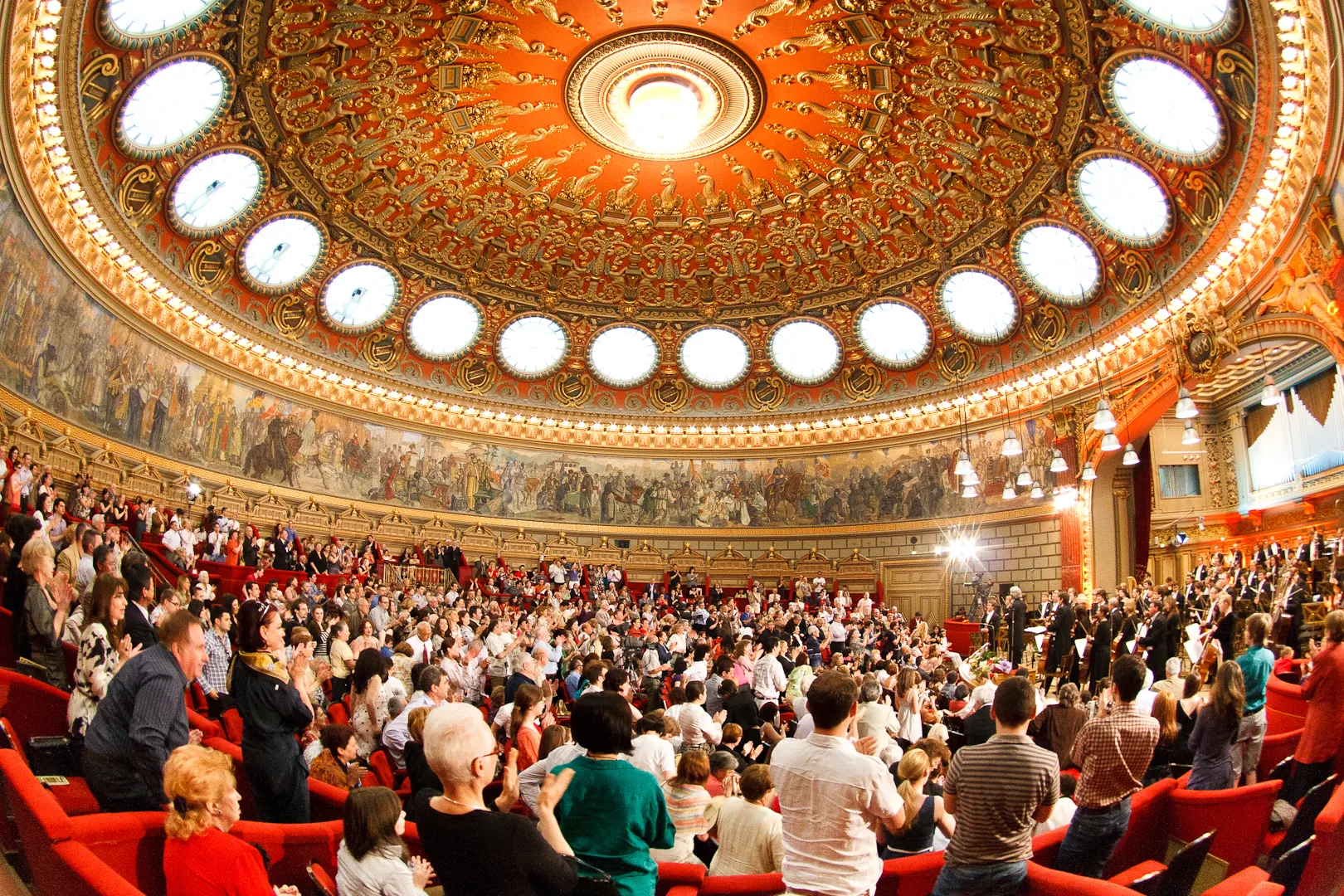
In even-numbered years the Enescu name belongs to the International Competition rather than the Festival. The 2026 edition runs 23 August – 19 September across violin, cello, piano and composition, with rounds and gala concerts at the Athenaeum and other venues — a rare chance to hear tomorrow's soloists at the start of their careers.
Planning tip
Competition rounds are more affordable than the festival galas and easier to get into. Confirm the schedule and ticketing on the official Enescu site before booking.